
Daily macro calculator for protein, carbs and fat
Calculate your correct daily macros for weight loss, muscle gain, or maintenance. Get personal protein, carb, and fat targets.
Share dis tool
Put am for your site
Related tools
Wetin na macros?
Macronutrients, wey people dey call macros for short, na di three main nutrients wey dey give body energy:
- Protein:
4 kcal/g - Carbohydrates:
4 kcal/g - Fat:
9 kcal/g
Tracking macros no be just about reaching your calories target. E help make sure say you dey chop enough protein to keep your muscle strong or make am grow, enough carbohydrates to power your training and activities, and enough fat to help your hormones work fine, help recovery, and help body absorb nutrients.
Macro split based on wetin you dey do
| Goal | Protein | Carbohydrates | Fat |
|---|---|---|---|
| Lose fat | 40% | 35% | 25% |
| Stay same size / recomposition | 30% | 40% | 30% |
| Build muscle | 30% | 50% | 20% |
How to calculate macros from calories
Once you know how much calories you need per day (from TDEE calculator), convert am to grams simple simple:
protein grams = (calories × protein%) ÷ 4
carbohydrate grams = (calories × carb%) ÷ 4
fat grams = (calories × fat%) ÷ 9
Example: 2,400 kcal with 30/40/30 split:
- Protein: (2400 × 0.30) ÷ 4 = 180 g
- Carbohydrates: (2400 × 0.40) ÷ 4 = 240 g
- Fat: (2400 × 0.30) ÷ 9 = 80 g
Protein: di most important macro
Protein na di most important macro to get right because am affect how your body look the most, and na di one wey most people no dey chop enough, especially when you dey try lose weight.
Protein targets wey doctors recommend:
| Goal | Protein per kg of bodyweight |
|---|---|
| No do exercise, maintenance | 0.8 g/kg |
| Do exercise, maintenance | 1.2–1.6 g/kg |
| Lose fat (keep your muscle) | 1.6–2.2 g/kg |
| Build muscle | 1.6–2.2 g/kg |
| Recomposition | 2.0–2.4 g/kg |
When you dey eat plenty protein while losing weight, e help keep your muscle intact instead of losing am along with di fat. Protein get di highest thermic effect — meaning your body use about 20–30% of protein calories just to digest and process am, compared to 5–10% for carbohydrates and 0–3% for fat. So high-protein diet get small advantage for metabolism beyond just keeping muscle.
For person wey weigh 75 kg and dey try lose fat, protein target of 1.8–2.0 g/kg mean say dem need 135–150 g of protein every day.
Carbohydrates: fuel for your workout
Carbohydrates na di fuel wey your body prefer for hard exercise. Muscle glycogen — na stored carbohydrate — dey power anything wey hard: strength training, cardio intervals, team sports. When glycogen finish, your workout no go strong, recovery go slow, and your focus go weak.
For people wey no dey do much or do light exercise, you no need plenty carbohydrates and fat can give energy instead. For athletes or people wey train 4+ times per week, keep carbohydrates high (45–55% of calories) go help your performance and recovery.
Low-carb diet work by forcing your body to use fat as main fuel (ketosis if e reach that extreme). Dem fit work for losing fat and for controlling blood sugar for people with insulin resistance. But dem usually make high-intensity exercise worse and no be necessary for fat loss — calorie deficit work anyway regardless of how you split your macros.
Fat: di minimum matter pass di maximum
Unlike carbohydrates, fat get real minimum wey you must reach. Your body need dietary fat for:
- Absorb vitamins wey dey need fat (A, D, E, K)
- Make hormones (including testosterone and oestrogen)
- Keep cell membrane strong
- Help your brain work (brain get about 60% fat when you dry am)
Di minimum wey people agree on na around 0.5–0.7 g of fat per kg of bodyweight, or no less than 20% of all your calories. Make you no drop fat below dis — like dem do for very low-fat diet — because am fit stop your hormones and damage your health over time.
For most people, fat intake go naturally fall within range when you set protein and carbohydrate targets correct, since di three macros must add up to 100% of your calories.
Change your macros when time pass
Di macro targets you start with na just estimates based on average. Real results depend on how your body work, quality of food, how hard you train, sleep, and stress. Plan to check and adjust after 2–3 weeks of tracking.
Signs say your protein too low: Muscle pain wey no make sense, slow recovery, hard to keep your strength when you dey lose weight.
Signs say your carbohydrates too low: Workout no strong, tired all di time, head no clear, crave food too much.
Signs say your fat too low: Your hormones no correct, skin and hair dry, no energy and mood low, vitamin deficiency from long time.
Di numbers from macro calculator na just starting point. Track consistent for few weeks and pay attention to how you feel and perform — dat go teach you more about wetin you actually need than any formula.
Frequently asked questions
How much protein I need per day?
Most research recommend 1.6–2.2 g protein per kg body weight per day for people wey dey exercise well well. For adults wey no dey active, di minimum na around 0.8 g/kg. Higher intake (up to 2.4 g/kg) fit help during calorie deficit to preserve muscle mass.
Make I track macros or just calories?
To track total calories na di most important thing for weight change, but macros matter for body composition. If you dey for deficit but you no dey get enough protein, you fit lose muscle join fat. For general health, to hit your calorie and protein targets dey usually enough. For athletic performance or body recomposition, to track all three macros go give you more precise control.
How many calories dey per gram for each macro?
Protein give 4 kcal per gram, carbohydrates give 4 kcal per gram, and fat give 9 kcal per gram. Alcohol give 7 kcal per gram but e no get nutritional value. Because fat get more than double di calorie density of protein or carbs, small amounts of high-fat food fit add up fast for your calorie budget.
Low-carb or low-fat diet better for fat loss?
Research dey show say none of dem better pass di other when total calories dey equal. Di best diet na di one wey you fit sustain long-term. Low-carb diets dey often reduce appetite and water retention quick, while low-fat diets fit dey easier for people wey like volume eating. Di macro split matter far less than di total calorie balance.
How I fit find my calorie target wey I go enter here?
Use TDEE calculator first to find your maintenance calories, then adjust based on your goal: subtract 300–500 kcal for fat loss, or add 200–500 kcal for muscle gain. You fit use di TDEE calculator for dis site to get your starting number, then enter am here to break am down into protein, carbs, and fat targets.
How many meals I suppose chop per day?
Meal frequency no get plenty effect for fat loss or muscle gain when total daily intake dey di same. Most people dey okay with 3–5 meals per day wey dem spread well. For muscle gain, to share protein across 3–4 meals of 30–40 g each fit slightly improve muscle protein synthesis compared to eating am all for one or two sittings.
Related articles
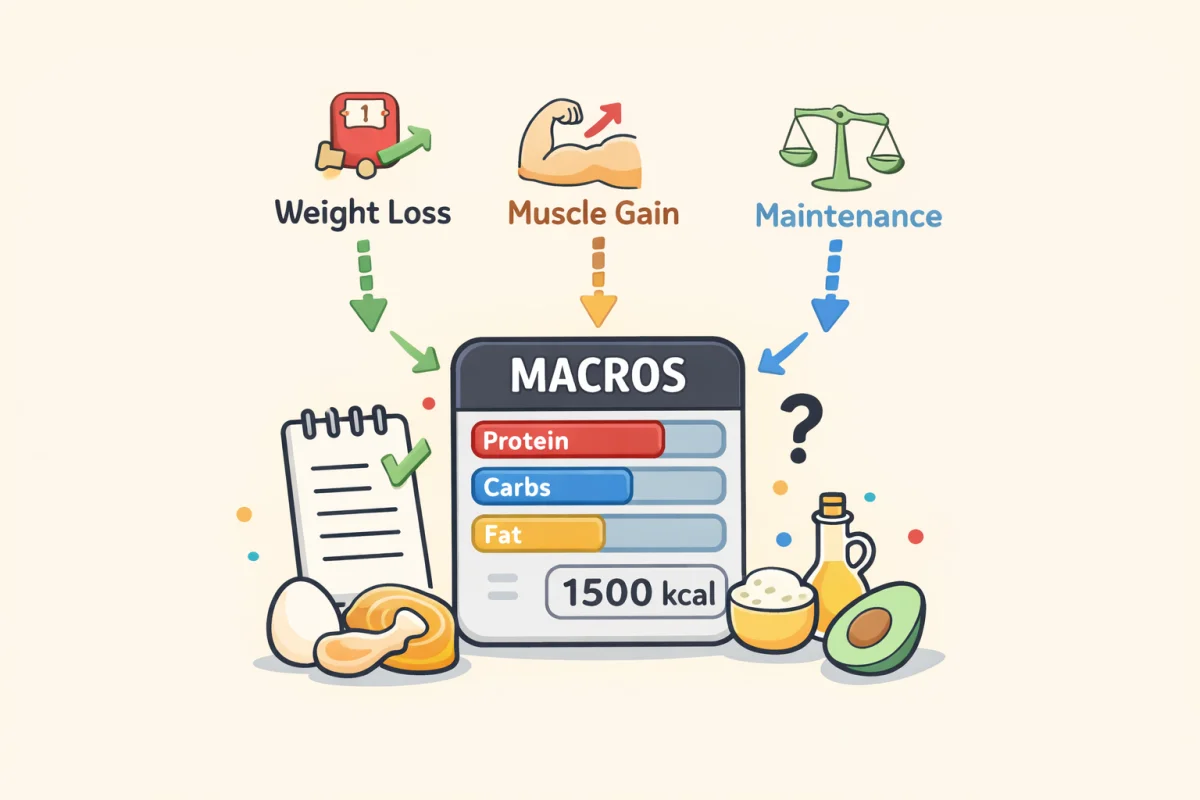 How To Calculate Macros for Your Goal (Weight Loss, Muscle Gain, or Maintenance)
Macros dey tell you wetin your calories dey made of, no be only how many you dey chop. This guide explain how to calculate macros for weight loss, muscle gain, or maintenance — and why correct ratio matter pass only cutting calories.
 How To Choose Correct Activity Level for TDEE Weh No Go Make You Overestimate
If you pick wrong activity level, na one of di biggest reason TDEE estimate dey miss. Dis guide explain how to choose your TDEE activity level more realistically and use am for beta calorie and macro planning.