
Cooking measurement converter
Convert cooking measurements between cups, tablespoons, grams, ounces, and more. Ingredient-based for accurate results.
Share this tool
Embed in your site
Related tools
Cooking conversion tables
Liquid measurement conversions
| From | To | Result |
|---|---|---|
| 1 US cup | Milliliters (mL) | 236.588 mL |
| 1 US cup | Tablespoons (tbsp) | 16 tbsp |
| 1 US cup | Teaspoons (tsp) | 48 tsp |
| 1 US cup | Fluid ounces (fl oz) | 8 fl oz |
| 1 Tablespoon (tbsp) | Teaspoons (tsp) | 3 tsp |
| 1 Tablespoon (tbsp) | Milliliters (mL) | 14.787 mL |
| 1 Teaspoon (tsp) | Milliliters (mL) | 4.929 mL |
| 1 US pint (pt) | Cups | 2 cups |
| 1 US pint (pt) | Milliliters (mL) | 473.176 mL |
| 1 US quart (qt) | Cups | 4 cups |
| 1 US quart (qt) | Liters (L) | 0.946 L |
Dry ingredient conversions (cups to grams)
Volume measures for dry ingredients are imprecise because different ingredients have different densities. The values below use standard culinary density assumptions.
| Ingredient | 1 Cup | ½ Cup | ¼ Cup | 1 Tbsp |
|---|---|---|---|---|
| All-purpose flour | 125 g | 63 g | 31 g | 8 g |
| Bread flour | 130 g | 65 g | 33 g | 8 g |
| Cake flour | 100 g | 50 g | 25 g | 6 g |
| Granulated sugar | 200 g | 100 g | 50 g | 13 g |
| Brown sugar (packed) | 220 g | 110 g | 55 g | 14 g |
| Powdered sugar | 120 g | 60 g | 30 g | 8 g |
| Butter | 227 g | 114 g | 57 g | 14 g |
| Cocoa powder | 85 g | 43 g | 21 g | 5 g |
| Rolled oats | 90 g | 45 g | 23 g | 6 g |
| Rice (uncooked) | 185 g | 93 g | 46 g | 12 g |
| Honey | 340 g | 170 g | 85 g | 21 g |
| Milk | 240 g | 120 g | 60 g | 15 g |
How to convert cooking measurements
Cups to milliliters
mL = cups × 236.588
Example: 2.5 cups = 2.5 × 236.588 = 591.47 mL
Tablespoons to milliliters
mL = tablespoons × 14.787
Example: 4 tbsp = 4 × 14.787 = 59.15 mL
Teaspoons to milliliters
mL = teaspoons × 4.929
Example: 3 tsp = 3 × 4.929 = 14.79 mL (≈ 1 tablespoon)
Fluid ounces to milliliters
mL = fl oz × 29.574
Example: 8 fl oz = 8 × 29.574 = 236.59 mL (≈ 1 US cup)
Why volume measurements are unreliable for dry ingredients
A cup is a fixed volume, but the weight of a cup of flour varies significantly depending on how it is measured. A cup of flour scooped directly from the bag — compressing it as the measuring cup pushes in — can weigh up to 160 g. A cup of flour spooned into the measuring cup and levelled weighs closer to 125 g. A cup of sifted flour weighs around 100 g. That is a 60% difference between the heaviest and lightest method, all from "one cup of flour."
This is why professional bakers and all serious baking recipes use weight (grams or ounces) rather than volume. Weight is consistent regardless of how the ingredient was packed, sifted, or settled. If you are scaling a recipe or baking anything where precision matters — bread, pastry, macarons — convert to grams and use a kitchen scale.
The converter uses standard culinary density values, which correspond to the spooned-and-levelled method for flour and the packed method for brown sugar. If your measuring technique differs, your results may vary by up to 10–15%.
Common cooking conversion questions
How many tablespoons are in a cup? 16 tablespoons = 1 US cup.
How many teaspoons are in a tablespoon? 3 teaspoons = 1 tablespoon.
How many ml is a cup? 1 US cup = 236.588 mL. For practical purposes, 240 mL is the standard working value used in most conversions.
How many cups is 250 mL? 250 mL = 1.057 US cups, or approximately 1 cup and 1 tablespoon. Note that 250 mL is the cup size used in Australia, Canada, and many metric-adapted recipes — not the US cup of 236.588 mL.
How many grams is a cup of flour? Using the standard spooned-and-levelled method: 125 g for all-purpose flour. Using weight rather than volume is more reliable for baking.
How many grams is a cup of sugar? 200 g for granulated white sugar. Brown sugar packed firmly into the cup is approximately 220 g.
What is a stick of butter in grams? One US stick of butter = 1/2 cup = 8 tablespoons = 113.4 g.
Frequently asked questions
How many tablespoons are in a cup?
There are 16 tablespoons in 1 US cup. Half a cup is 8 tablespoons, a quarter cup is 4 tablespoons, and an eighth cup is 2 tablespoons. This is one of the most useful cooking conversions for scaling recipes up or down without a measuring cup.
How many teaspoons are in a tablespoon?
There are 3 teaspoons in 1 tablespoon. There are 48 teaspoons in 1 US cup. This means 1 teaspoon is 1/3 of a tablespoon, and a half tablespoon is 1.5 teaspoons — a common measurement for leavening agents and spices in baking.
How many ml is a cup?
1 US cup equals 236.588 mL. For practical cooking purposes, 240 mL is the standard working value. Note that Australian and Canadian recipes use a 250 mL cup — slightly larger than the US cup. If a recipe uses 2 cups, that is approximately 473 mL (US) or 500 mL (metric cup).
How many grams is a cup of flour?
Using the standard spooned-and-levelled method, 1 cup of all-purpose flour weighs approximately 125 g. Scooping directly from the bag can pack in up to 160 g. Bread flour is slightly heavier at around 130 g per cup, and cake flour lighter at around 100 g. For consistent baking results, measuring flour by weight rather than volume is more reliable.
How many grams is a cup of sugar?
1 cup of granulated white sugar equals approximately 200 g. Brown sugar packed firmly into the cup is approximately 220 g. Powdered (icing) sugar is lighter at around 120 g per cup. As with flour, weight measurements are more reliable than volume for baking since density varies with how tightly the ingredient is packed.
How do I convert a US recipe to metric measurements?
For liquids, multiply cups by 240 to get mL (or use 236.6 for precision). For dry ingredients, use weight: flour is ~125 g per cup, sugar ~200 g, butter ~227 g. For small measures, 1 tablespoon = ~15 mL and 1 teaspoon = ~5 mL. A kitchen scale set to grams is the most accurate approach for baking, where small measurement differences can affect the result.
Related articles
 How to Weigh Ingredients Without a Scale
No kitchen scale? You can estimate weights using volume measurements, common reference objects, and ingredient density tables. Here's how to do it accurately enough for most recipes.
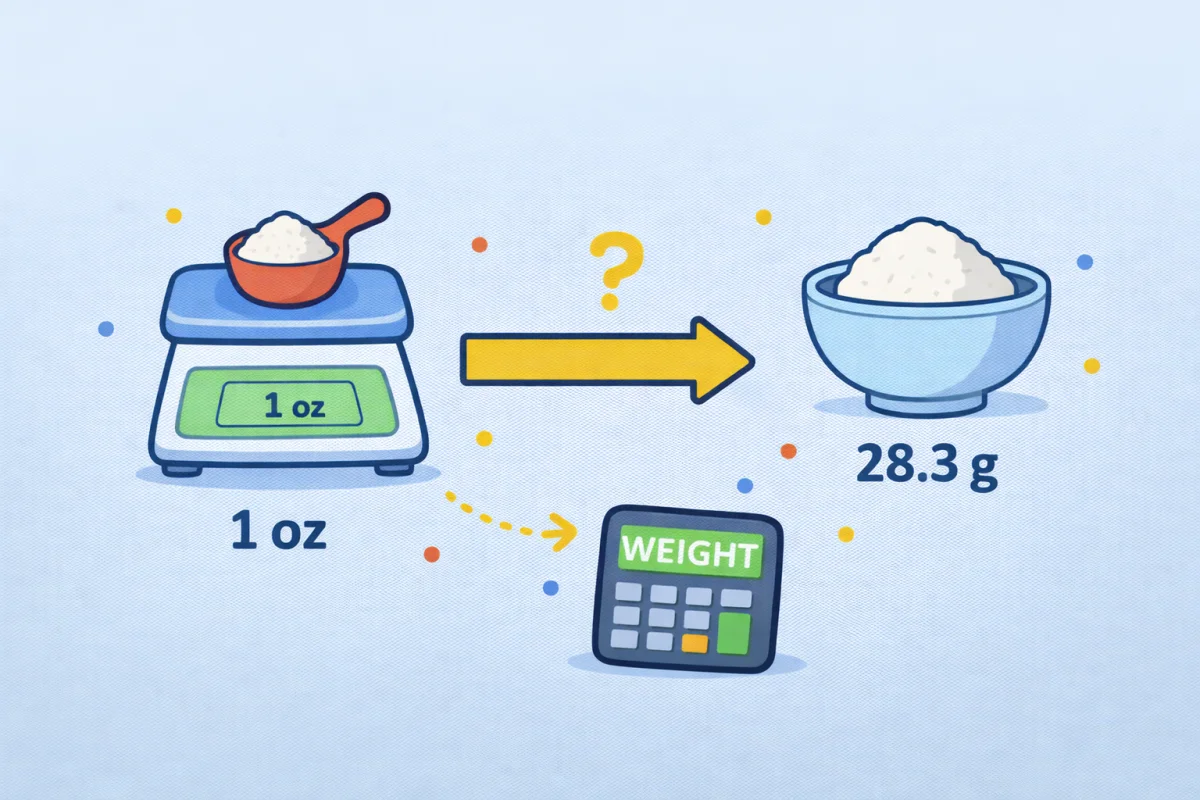 Ounces to Grams Conversion for Food and Recipes
Converting ounces to grams and back is a constant need when cooking from recipes that mix US and metric measurements. Here is the exact conversion, a full reference table, and notes on how food packaging uses these units.
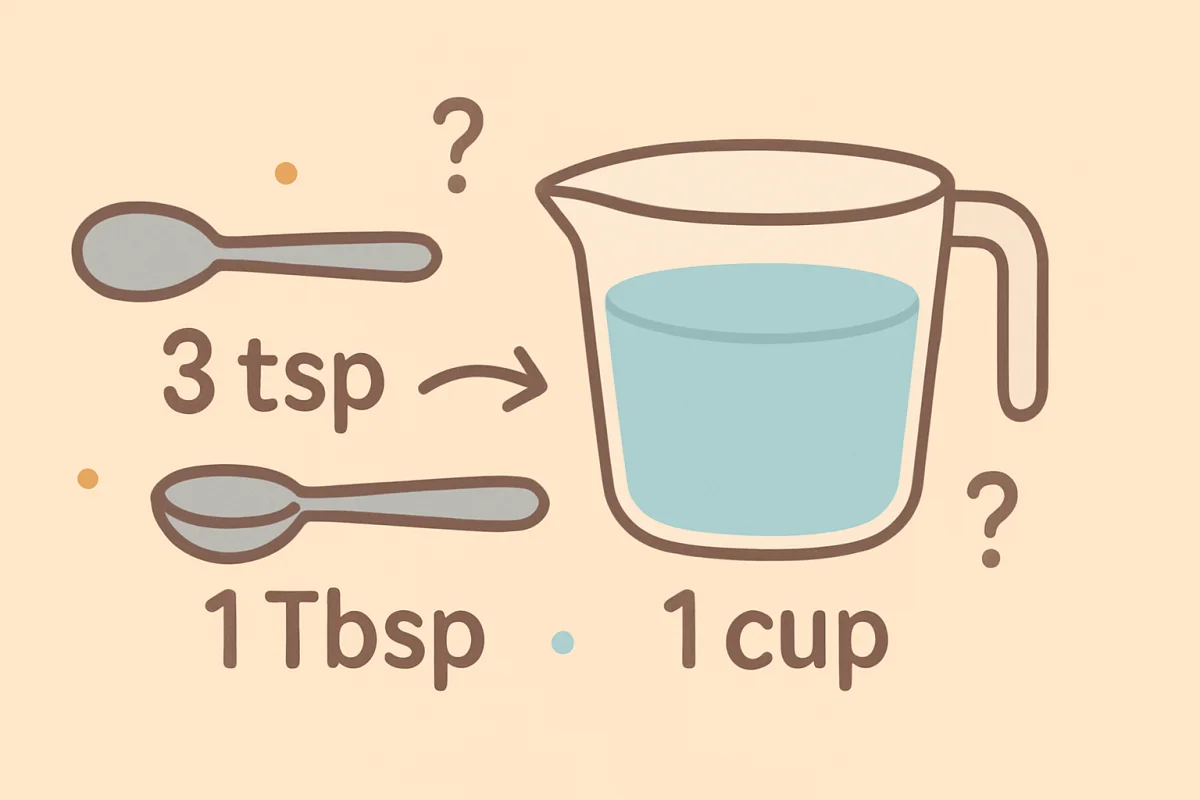 Teaspoons, Tablespoons, and Cups — Volume Equivalents You Actually Need
How many teaspoons in a tablespoon? How many tablespoons in a cup? Here are the exact equivalents for US cooking volume measurements, with a reference table and practical notes on where these units trip people up.