Small Room Layout Mistakes to Avoid Before You Move or Buy Anything
Small rooms are unforgiving.
In a large room, a layout mistake may feel inconvenient. In a small room, the same mistake can make the whole space feel cramped, awkward, and harder to live in every day. That is why people often blame the room size when the real problem is the layout.
This is also why searches like small room layout ideas, how to arrange furniture in a small room, and small room layout mistakes are so common. People are not only trying to make a room look better. They are trying to make it function without wasting space or money.
Why Small Rooms Magnify Layout Problems
Every piece matters more in a small room.
There is less margin for:
- oversized furniture
- awkward traffic flow
- dead corners
- unnecessary pieces
- bad spacing decisions
That means a layout that is “almost okay” can still make a small room frustrating to use.
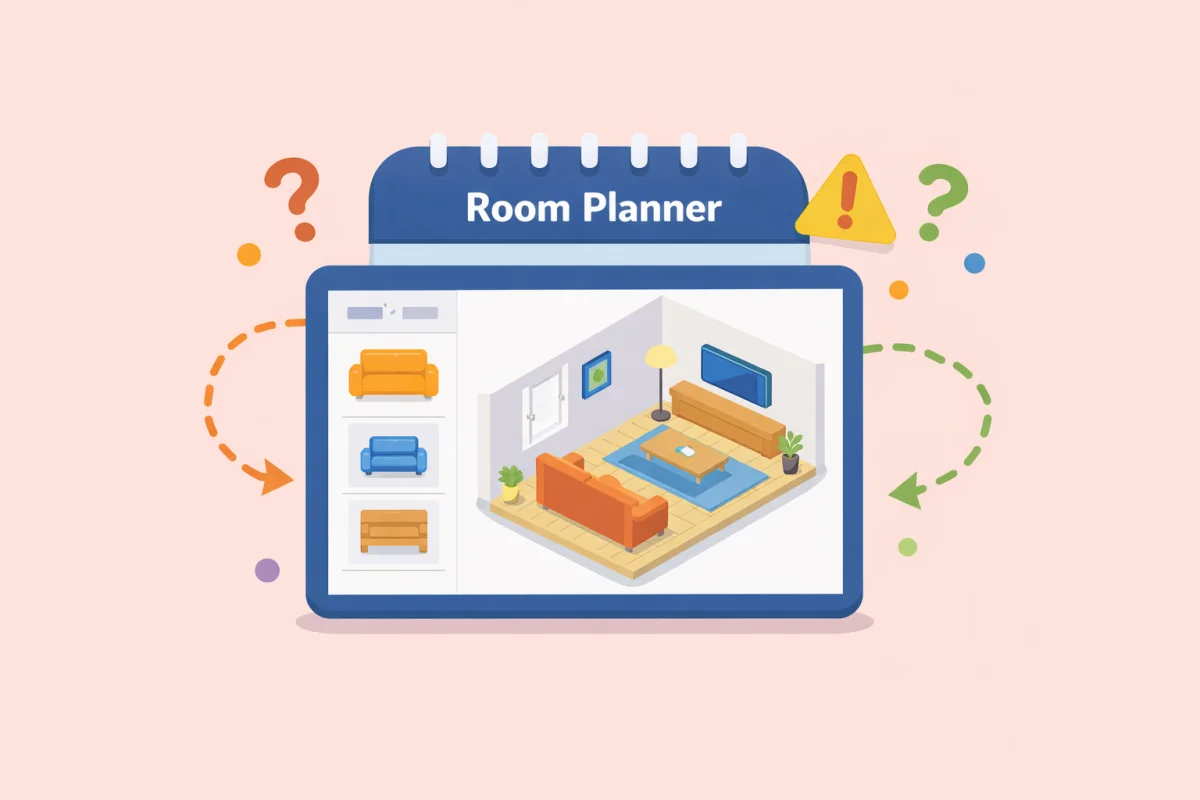
If you want to test arrangements before committing, the Room Planner is built for exactly that kind of decision.
Mistake 1: Buying Furniture Before Planning the Layout
This is probably the most expensive mistake people make.
They buy the sofa, desk, bed, or table because it looks right in isolation, then try to force the room around it later.
In a small room, that order usually fails.
The better process is:
- measure the room
- understand the room’s function
- test a layout
- then buy furniture that fits the plan
That sequence prevents a lot of regret.
Mistake 2: Choosing Furniture That Is Too Deep or Too Wide
Small rooms do not just need shorter furniture. They need furniture with proportion that protects movement.
A piece may technically fit against the wall and still:
- block circulation
- make the room feel visually heavy
- reduce useful floor space
This is especially common with:
- sofas
- beds
- dining tables
- oversized desks
In a small room, even a few inches of extra depth can matter more than people expect.
Mistake 3: Ignoring Walkways
One of the easiest ways to make a room feel cramped is to treat every bit of open floor as unused space to fill.
Good layout protects movement.
If the room forces people to:
- squeeze past furniture
- turn awkwardly around corners
- open doors into blocked space
then the layout is costing comfort every single day.
Small rooms need clear paths more than they need more pieces.
Mistake 4: Pushing Everything to the Walls Automatically
People do this in small rooms because it feels like the obvious way to create more space.
Sometimes it helps. Sometimes it makes the room feel flatter, more disconnected, and less intentional.
The right choice depends on:
- the room shape
- the function of the space
- the scale of the furniture
The point is not to follow a rule mechanically. The point is to test what creates usable space, not just empty-looking edges.
Mistake 5: Forgetting the Room’s Main Purpose
A room layout is not successful because every piece fits.
It is successful because the room supports the activity it exists for.
A small bedroom may need:
- better circulation around the bed
- storage access
- one uncluttered path
A small living room may need:
- seating orientation
- one focal point
- open entry and walking space
The layout should serve the room’s job, not just its measurements.
Mistake 6: Using Too Many Small Pieces
This sounds counterintuitive, but small rooms can become cluttered when people overcorrect with many tiny pieces.
Too many little tables, stools, shelves, or decorative items can make the room feel busier and less usable, even if each individual piece is technically small.
Sometimes fewer, better-sized pieces create a cleaner and more functional result.
Mistake 7: Not Testing the Layout Before Buying
This is where room planning becomes practical instead of aspirational.
When you test the layout first, you can see:
- whether the main pieces fit
- whether doors and windows stay usable
- whether walkways still make sense
- whether the room feels balanced
That is much cheaper than learning the answer after delivery.
A Better Way to Plan a Small Room
The strongest approach usually looks like this:
1. measure the room carefully 2. identify the main function 3. choose the anchor piece first 4. protect movement space 5. add only the pieces that still serve the room well
That order helps keep the layout practical instead of reactive.
Final Takeaway
If you want a small room to feel better, the goal is not to fill every corner. It is to make every piece earn its place. Most small room layout mistakes come from buying too early, ignoring circulation, or designing around objects instead of the room’s real function.
Use the Room Planner to test the layout before you buy or move furniture. In a small room, planning first is usually the difference between “it fits” and “it actually works.”