How to Read Furniture Measurements for Accurate Room Planning
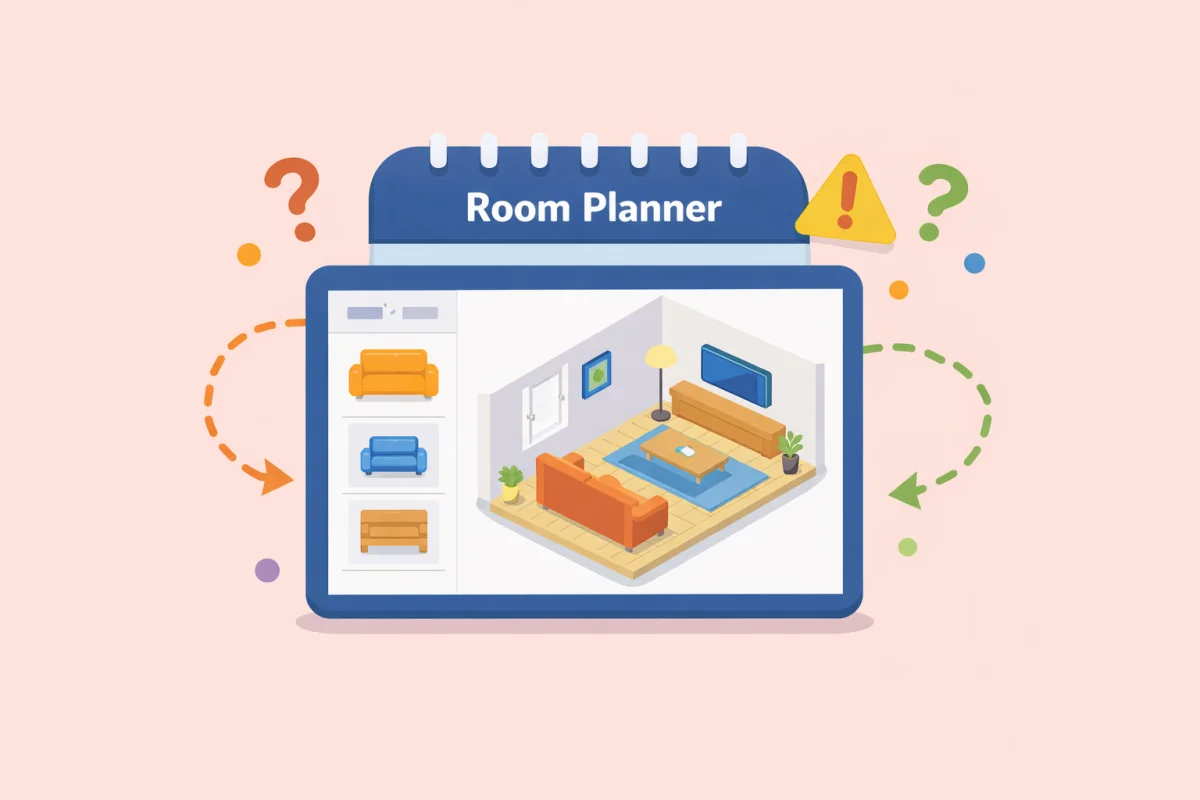
Getting furniture measurements right is the foundation of any good room plan. If you start with wrong numbers, every decision you make afterward—whether a sofa fits, how much clearance you actually have, whether traffic flows well—is built on a faulty assumption. When you use an isometric room planner, accuracy matters even more because you're visualizing the space before you buy or move anything.
The good news is that measuring furniture and rooms accurately isn't complicated once you know which dimensions matter and where to find them. Most pieces come with this information, and measuring your own space takes only a few minutes with a tape measure.
Why Furniture Measurements Matter in Room Planning
A sofa listed as 2.4 metres wide sounds large until it's on paper next to a room that's only 3.5 metres across. Suddenly that sofa takes up nearly 70 percent of one wall, leaving barely any space for tables or walkways. Without accurate measurements, you can't make this judgment before you buy.
Measurements become even more critical when you're working with small rooms. In a bedroom that's 3 metres by 3.5 metres, being off by 20 centimetres on a bed or dresser can mean the difference between comfortable circulation and a cramped, awkward layout. The room planner helps you catch these problems virtually instead of discovering them after furniture arrives.
The isometric 3D view works best when the underlying dimensions are correct. The visual perspective shows you depth and proportion in a way a flat floor plan doesn't, but that visual advantage is only useful if the measurements feeding into it are reliable.
Understanding Standard Furniture Dimensions
Furniture comes in typical sizes, even though specific products vary. Knowing these ranges helps you estimate measurements quickly and spot unusual pieces that need special planning.
Sofas typically range from 2 metres to 2.8 metres in width, with depth around 90–100 centimetres. A loveseat or apartment-sized sofa might be 1.5–1.8 metres wide. These measurements refer to the outer dimensions of the piece as it sits in your room, not the usable seating surface.
Beds follow standard mattress sizes. A single bed is about 0.9 metres wide and 1.9 metres long. A double bed is roughly 1.35 metres by 1.9 metres. A queen bed runs about 1.6 metres by 2 metres. These dimensions describe the mattress, but remember the bed frame usually extends slightly beyond the mattress on all sides—often by 5–10 centimetres. When you place a bed in the room planner, account for the full frame size, not just the mattress.
Dining tables vary by style and capacity. A small table for two might be 0.8 metres wide by 1.2 metres long. A table seating four is often around 0.9 metres by 1.4 metres. Larger tables seating six or eight can be 1 metre by 1.8 metres or more. Round tables efficient for smaller spaces typically range from 0.9 metres to 1.2 metres in diameter.
Desks for home offices generally span 1.2 to 1.5 metres in width and 60–70 centimetres in depth. Narrower desks around 1 metre wide work in tight spaces but offer less surface area. Wider desks of 1.6–1.8 metres are common for people who need multiple monitors or lots of work surface.
Dressers and storage pieces vary widely. A standard dresser is often 1–1.3 metres wide and 50–60 centimetres deep. Nightstands are typically 40–60 centimetres wide and 35–45 centimetres deep.
These are guidelines, not rules. Always check the specific measurements of the piece you're considering, because a designer sofa or a custom dining table might be notably different.
Where to Find Furniture Measurements
Most furniture retailers list dimensions in the product specs. Look for width, depth, and height—all three matter, though in a room planner, height is less critical than the footprint (width and depth) when deciding if something fits.
Online furniture stores display measurements near the product photos or in a specifications section. Width × Depth × Height is the standard order. Some sites also note seat height for chairs and sofas, which can affect legroom under tables or comfort relative to other seating.
Manufacturer websites often have detailed PDFs with multiple views and exact measurements. If you're considering a brand-name piece, downloading the spec sheet from the maker's site gives you the most reliable data.
Store displays can be measured in person if you're shopping locally. If you're buying online and unsure about scale, visiting a showroom to see the piece in context can help you understand its actual size relative to a person.
Your existing furniture should be measured if you're keeping pieces in the new layout. Use a tape measure for accuracy rather than guessing. Check width, depth, and how far any arms, legs, or back extend beyond the main frame.
How to Measure Your Room Correctly
Room measurements are equally important. Measure from wall to wall, not including baseboards or trim. Measure the length and width of the main space. If the room has alcoves, built-in shelving, or irregular wall angles, measure those too—they affect how furniture can be placed.
Measure from the same reference point (usually a corner) along each wall to avoid confusion. If a room is roughly rectangular, four measurements (two lengths and two widths) usually suffice. If walls aren't parallel or the space is L-shaped, you may need additional measurements to capture the actual shape.
Also measure door openings and swing clearance. A door that opens into the room takes up space where you can't place furniture. If a door swings inward, note how far it extends into the room when fully open. This affects whether a chair or ottoman can occupy that corner.
Window positions matter less for furniture fit but more for layout quality. Note where windows are and how much light they let in. This influences where you place seating, desks, or beds.
Room height rarely affects furniture layout in the planner, but note it anyway in case you're considering tall bookcases, loft beds, or other vertical elements.
Reading Measurements in the Room Planner
The room planner works in metres. If your measurements are in feet and inches, convert them before entering data. A common conversion: 1 foot is about 0.3 metres, and 1 inch is roughly 2.54 centimetres.
- 6 feet ≈ 1.83 metres
- 8 feet ≈ 2.44 metres
- 10 feet ≈ 3.05 metres
Once you've entered your room dimensions and started placing furniture, the visual scale should feel right. A bed that's actually 1.6 metres wide should look like it takes up roughly the same proportional space on screen as it would in real life.
If something looks obviously wrong—a sofa that appears huge relative to the room, or a bed that seems tiny—double-check your input measurements. A single misplaced decimal point (typing 24 instead of 2.4) will throw off the entire layout.
Common Measurement Mistakes and How to Avoid Them
Forgetting to include frame extensions is a frequent error. A sofa arm adds 10–15 centimetres to the overall width. A bed frame adds depth beyond the mattress. A desk with shelving above it needs to account for the shelf unit's footprint. Always measure the full assembled furniture piece, not just the main component.
Using interior dimensions instead of exterior also skews the results. For a sofa, you want the outer edge-to-edge width as it sits in your room. For a bed, measure the full frame. These are the actual footprints that determine fit.
Rounding too aggressively can hide real constraints. Saying a sofa is "about 2.4 metres" when it's actually 2.52 metres might seem close, but in a small room with tight clearances, that extra 12 centimetres could matter. Use exact measurements from retailers or your tape measure.
Measuring from different points in the room creates inconsistency. Always measure from the same corner or reference line so your dimensions relate to each other correctly. If you measure one wall from the corner and another wall from the middle, you'll get confused data.
Forgetting about doors and traffic paths means your layout might look good on paper but feel cramped in practice. Always account for swing clearance and the main paths people use to move through the room.
Tips for Measuring Awkwardly Shaped Pieces
Some furniture has an irregular footprint. A sectional sofa, for example, is really two or three separate pieces at angles. The room planner can usually handle this by treating it as multiple items or letting you rotate pieces independently. Measure each section separately and note how they connect.
Curved or rounded furniture like a round table or curved sofa needs diameter or width/depth at its widest points. For odd shapes, take multiple measurements to define the outline, then use the largest dimensions.
Pieces with legs or frames that don't touch the floor on all sides still occupy the full footprint when placing them. A sofa with raised feet still takes up the full width and depth of the piece for layout purposes.
Using Measurements to Test Multiple Layouts
Once you've accurately entered furniture and room measurements into the room planner, you can test different arrangements quickly. The 3D isometric view makes it easy to rotate pieces, slide them to different walls, and see how alternative layouts feel.
Start with your largest piece, then add items one by one. After each addition, step back and check whether walkways still feel clear, whether the arrangement balances visually, and whether light and focal points make sense. Accurate measurements make these judgments meaningful because you're working with real constraints, not estimates.
The measurement accuracy you invest upfront directly translates to confidence in your final plan. When you commit to buying furniture or moving heavy pieces, you'll know the layout actually works because it's based on precise data, not guesses.
Summary
Accurate measurements are the starting point for effective room planning. Know the typical dimensions of common furniture, find exact specifications for the pieces you're considering, and measure your room carefully. When you place this data into an isometric room planner, you get a reliable visual preview of your space before anything moves. Invest the time in getting measurements right, and your layout decisions will be sound.