How to Layout a Rental Apartment Without Making Permanent Changes
Renting means working with what's there: fixed walls, existing light switches, landlord-installed fixtures, and lease clauses that prohibit any "permanent modifications." That doesn't mean you're stuck with a bad layout — it means you have to plan more carefully before anything gets moved.
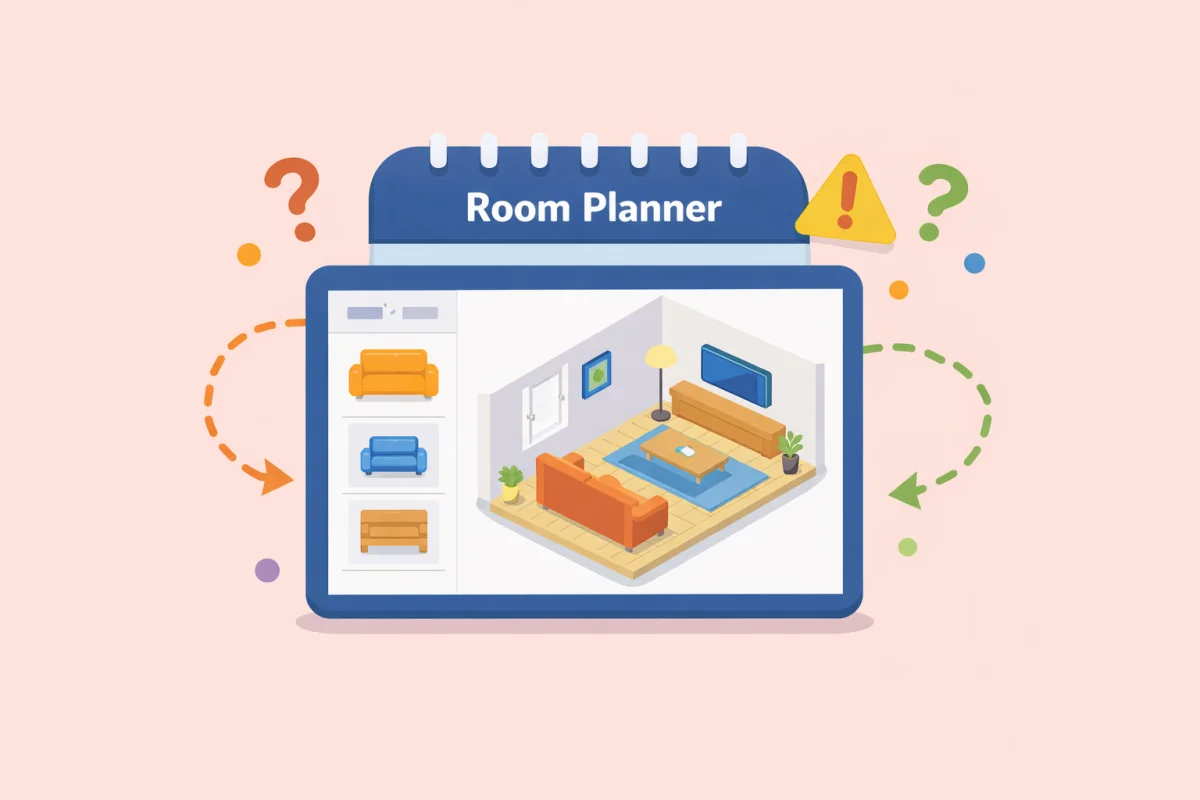
The Room Planner lets you test arrangements on screen before you touch a single piece of furniture. For a rental, that step is especially worth doing — you often can't patch walls, fill holes, or paint over marks without losing your deposit.
Start With What You Can't Change
In any home, the constraints shape the layout. In a rental, those constraints are fixed and non-negotiable:
Doors and door swings. Every door needs clear arc space. A standard interior door swings about 80–90 cm. Furniture placed in that arc will block the door — and if it damages the door or frame, that's a deposit issue.
Windows. You can't move them, and blocking them with tall furniture kills natural light. Plan around windows, not against them. Furniture that sits below window height keeps light flowing through the room.
Fixed outlets and light switches. These determine where you can practically put a desk, floor lamp, bed with phone charging, or TV setup. A bed across the room from any outlet means extension cords across the floor — manageable but annoying.
Radiators and heating vents. Blocking a radiator with a sofa doesn't just look wrong — it reduces heating efficiency and can create damp patches on the wall behind it. Keep furniture at least 30 cm away from radiators where possible.
Built-in storage. Many rentals have wardrobes, cupboards, or alcove shelving already installed. Map these before planning anything else — they'll absorb storage needs you'd otherwise have to solve with freestanding furniture.
Measure First, Decide Second
The most common rental layout mistake is choosing or buying furniture before confirming it fits. Measure every doorway, hallway, and stairwell between the entrance and the target room — not just the room itself. A sofa that fits in the living room doesn't help if it can't get through the front door.
Key measurements to take:
- Room length and width (measure at floor level, at furniture height, and note any alcoves or recesses)
- Door widths and the clearance height if you're moving tall pieces
- Hallway width and any turns between entrance and room
- Ceiling height if you're considering tall shelving units
- Window sill height (anything below this won't block light)
Enter all of these into the Room Planner before placing anything. It's much easier to discover a sofa doesn't fit by moving it on screen than by maneuvering it up a staircase and realizing it won't turn the corner.
The Core Layout Principle: Anchor, Then Fill
In a rental, the same basic principle applies as anywhere: place the largest piece first and build around it.
In a bedroom, that's the bed. In a living room, it's the sofa or the main seating group. In a studio, it's whichever function takes up the most space.
Once the anchor is placed, the question becomes: does everything else fit around it with enough clearance to move naturally? Not theoretical clearance — actual clearance. Can you open the wardrobe door? Can someone walk behind the sofa to reach the window? Can you get out of bed on both sides if you have a partner?
60–80 cm is the minimum comfortable walkway width. 90 cm is comfortable. Anything under 60 cm and people will start turning sideways.
How to Define Zones Without Walls
Open-plan rentals and studio apartments need zones — distinct areas for sleeping, working, eating, and relaxing — without the option of adding walls or permanent dividers.
Rugs define areas. A large rug under a sofa and coffee table creates a living zone. A smaller rug under a desk chair defines a work area. The furniture doesn't need to sit on the rug — just within its visual boundary.
Furniture placement creates division. A sofa facing away from the bedroom area acts as a soft divider. A bookcase placed perpendicular to the wall (if your lease allows freestanding furniture arrangements) creates a visual break without a fixed wall.
Lighting separates spaces. A floor lamp in the reading corner, pendant above the dining table, and a desk lamp at the work area each claim their zone independently of the furniture. This matters especially in studio apartments where every zone shares the same ceiling light.
Consistent color groupings help. Keeping all bedroom furniture in similar tones and all living room pieces in another creates visual separation even when the physical separation is just a meter of empty floor.
Renter-Friendly Furniture Choices That Work With Any Layout
The furniture you choose matters as much as the placement. For rentals specifically, these characteristics make layouts more adaptable:
Legs instead of flat bases. Furniture on legs shows floor space underneath, making rooms feel larger. It's also easier to clean, and you can see that nothing is trapped beneath it. Flat-base sofas and bed frames make small rooms feel heavier.
Modular pieces. A modular sofa can be reconfigured if the first arrangement doesn't work. L-shaped sectionals that can be split into individual pieces are especially useful in rental apartments where you might move to a differently shaped space next.
Multi-function storage. Ottomans with storage, beds with drawers underneath, benches with lift-up lids — these add storage without requiring shelves mounted to walls, which is often restricted or limited to small picture hooks in rental agreements.
Freestanding shelving. A tall bookcase or shelving unit can hold as much as a built-in wall unit, doesn't require drilling, and moves with you. The main limitation is stability — very tall freestanding shelving may need anti-tip wall brackets, which can usually be installed with small hooks your landlord won't object to (though worth confirming).
What Most Renters Get Wrong
Pushing all furniture to the walls. This is the instinct in a small room — get everything out of the middle. But it usually makes the room feel like a waiting room: all perimeter, no center. Pulling the sofa forward even 30–40 cm to face a focal point creates a real seating area.
Buying a bed frame before measuring the room access route. Bed frames are often much harder to move than the mattress suggests. If the frame doesn't disassemble, it may need to clear a doorway as a single unit — and a queen platform frame is often 1.5m wide.
Ignoring the view from the entrance. What someone sees when they first walk into a room sets the whole impression of the apartment. If the first thing visible is a cluttered desk or the side of a wardrobe, the room feels worse than it is. Plan the entrance sightline as deliberately as you plan the layout.
Over-furnishing. Renting often means living in a smaller space than you'd prefer, and the instinct is to fill it. More furniture rarely solves the problem — it usually makes it worse. One well-chosen piece that does its job properly beats three that don't quite work.
Testing It Before Moving Anything
Paper or screen planning before physical movement saves real effort. For a rental, it also saves potential deposit deductions from scuffs, floor marks, and wall scrapes that happen during trial-and-error rearrangements.
Use the Room Planner to map the room at scale, test two or three arrangements, and confirm clearances before you lift anything. Most good layouts require moving the anchor piece once, not four times — and screen testing is why.