How to Calculate a Return Window or Refund Deadline
Return policies seem simple on the surface: "30-day returns," "60-day money-back guarantee." But when you actually need to use them, the exact end date matters — and it's easy to be off by a day or two in ways that can cost you.
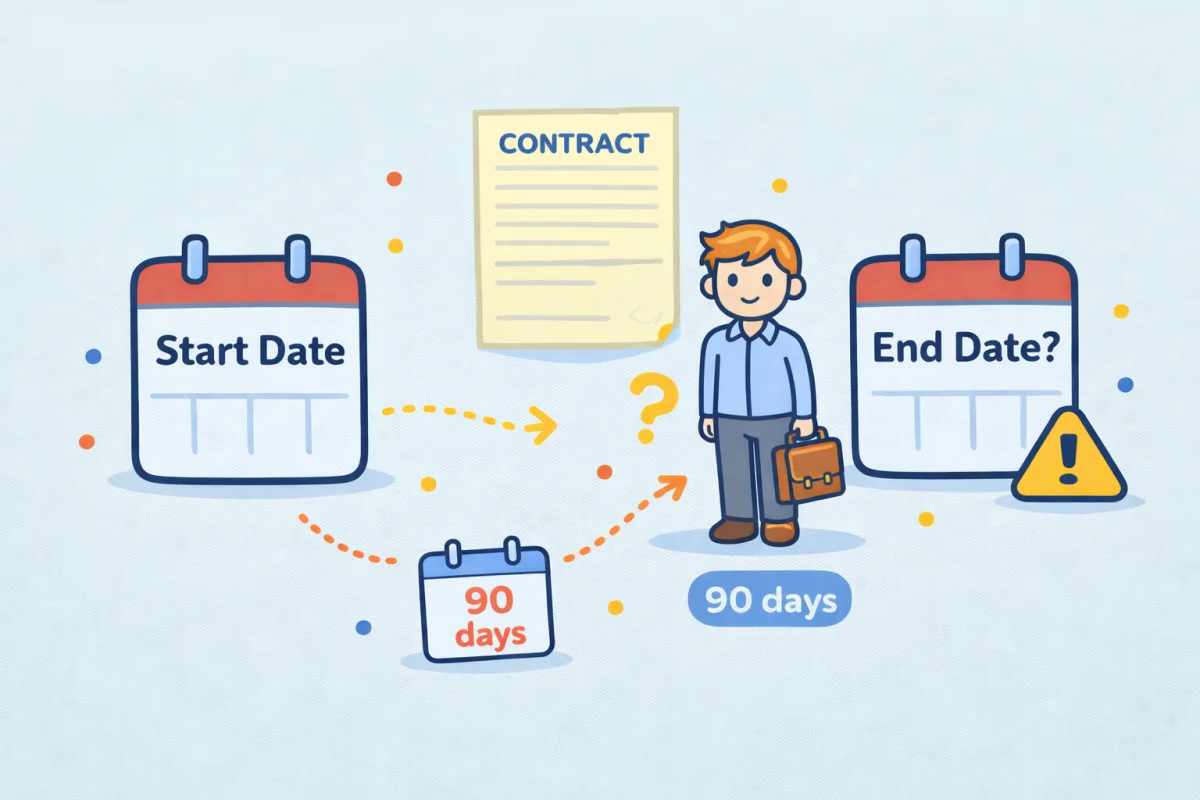
A return window is just date addition: take the start date, add the stated number of days, and that's your deadline. But which date you start from, whether the day you received or purchased counts as day 0 or day 1, and how different retailers define "30 days" can all shift the deadline by several days.
What Does the Clock Start From?
The most common point of confusion with return deadlines is the start date. Retailers use different reference points:
Purchase date: The transaction date, often the date on your receipt or order confirmation. Common for in-store purchases.
Delivery date: The date the package arrived at your address. More common for online orders, since you can't return something you haven't received.
Ship date: Occasionally used, meaning the day the retailer shipped the order — not when you received it. This is the least favorable for consumers and not the norm, but it does appear in some policies.
Invoice date / billing date: For subscriptions or software purchases, the clock may start on the billing date rather than any physical delivery.
Read the policy carefully. "30 days from purchase" on an online order where delivery takes 5 days gives you 5 fewer days to decide than "30 days from delivery."
Is the First Day Day 0 or Day 1?
Most return policies count inclusively — the day of purchase or delivery is day 1, so a 30-day window ends on the 30th calendar day after the start date, which is 29 days later on the calendar.
But some policies count the start date as day 0, making the deadline the 30th calendar day after the start date — giving you one extra day.
In practice, most retailers lean toward the consumer-friendly interpretation when it's ambiguous: if you show up at day 30 and argue that day 0 was the start, most stores will accept the return. But don't count on it.
The safest approach: add the stated number of days to the day before the start date. If you received an item on April 5 and the policy is 30 days, calculate April 4 + 30 days = May 4. Aim to return by May 3 to be safe regardless of interpretation.
How to Calculate the Exact Deadline
Use the date add calculator to find the deadline precisely. Enter the start date (purchase or delivery date), add the number of calendar days in the return window, and you'll get the exact date.
Example: You ordered a jacket online. It was delivered on March 12. The retailer has a 45-day return policy from delivery. Enter March 12 as the start date and add 45 days. The deadline is April 26.
Do this at the time of purchase, add the date to your calendar, and you won't have to scramble later trying to remember when it was delivered.
Common Return Window Lengths and What They Mean
14 days — Standard minimum in the EU under the Consumer Rights Directive for online purchases. Consumers have a 14-day right of withdrawal for most online and distance-sold goods, no reason required. This is the legal floor; many retailers offer longer.
30 days — The most common standard in US retail. Some retailers offer 30 days for online purchases but 15 days for sale items — read the details.
60 days — Generous policy, common among outdoor gear and electronics retailers trying to differentiate on customer service. Often marketed as a "no questions asked" window.
90 days — Common in software, subscription services, and some premium retailers. Also used by membership warehouse stores like Costco for many product categories.
Year-round or "lifetime" returns — REI used to have this and ended it. Costco still offers it for electronics (90 days) but no-time-limit for most other items with receipt. These are marketing features as much as policies.
EU / UK statutory right — Worth knowing if you're buying from European retailers: you have a legal minimum of 14 days to withdraw from most online purchases, independent of the retailer's stated policy. Some countries (Germany, for example) make this 30 days for certain purchase types.
When "30 Days" Isn't 30 Days
A few situations where the stated window is shorter than it appears:
Holiday purchases with extended return windows. Retailers often extend return windows for gifts purchased in November–December, with returns accepted through late January. But the extension applies from the purchase date, not the gift date. If a gift was bought November 15 with a "return by January 15" extension, and you received it December 25, your effective window is just 21 days — not 60.
Sale items with shortened windows. Many retailers carve out final sale, clearance, or markdowns with reduced or zero return windows. This is usually disclosed at checkout but easy to miss.
Opened vs unopened. Electronics retailers commonly require items to be in original, unopened packaging for a full return. An opened item may only qualify for an exchange or a restocking-fee return, with a shorter window.
Digital and downloadable products. Software, games, and media often have 14-day or no return windows once downloaded. Steam offers refunds within 14 days of purchase and under 2 hours of playtime. Apple's App Store refund policy is discretionary.
Subscription Refund Deadlines
Subscription services typically give you a trial period (7, 14, or 30 days is common), after which you're billed. If you want to cancel and get a refund, the deadline is usually the last day of the trial period — and it's a hard cutoff.
The clock for most subscription trials starts on the sign-up date, not the first use date. A 14-day free trial that starts April 1 ends April 14. Cancel by April 14 (or in some cases, by April 13 before the billing runs) to avoid being charged.
Some services make it harder than it should be to find the cancellation option. Set a calendar reminder 2–3 days before the trial ends, not on the last day.
To find your exact trial end date, use the date add calculator: enter the signup date and add the trial length in days.
Credit Card Dispute Windows
Beyond the retailer's return policy, you often have a second option: a credit card dispute (chargeback). Dispute windows are typically 60–120 days from the transaction date, depending on your card issuer and the reason for the dispute.
Visa and Mastercard's general dispute window is 120 days from the transaction date for most claim types. American Express tends to be more flexible. Some claim types (fraud vs. quality dispute) have different windows.
This isn't a reason to skip the retailer's return process — chargebacks should be a last resort. But it's useful to know the window exists independently of whatever the retailer offers, especially for failed deliveries or significantly misrepresented items.
The Simple Rule
Calculate your return deadline the day you receive the item. Add the return window to the delivery date (or purchase date, depending on policy), put the deadline in your calendar, and leave a few days of buffer before you actually need to decide. Once it's in your calendar, you'll never miss a return window again.