How to Plan a Room Layout Before Buying Furniture
Most room-layout problems start long before the furniture arrives.
They start when people buy pieces one by one without checking how the full space will actually function. A sofa technically fits, but blocks movement. A dining table looks perfect in isolation, but makes the room feel cramped. A bed works on paper, but leaves no space for storage or walking.
That is why people search for how to plan a room layout, room layout ideas, and how to arrange furniture in a room. They are not just looking for decoration advice. They are trying to avoid expensive decisions that are hard to undo once the furniture is in the room.
Why Room Layout Matters More Than Individual Furniture
A room rarely feels good because every item is attractive on its own.
It feels good because:
- the scale makes sense
- movement feels natural
- key pieces relate to each other well
- the space supports what the room is actually for
That is why layout usually matters before style. A beautifully chosen piece can still make a room worse if the placement breaks circulation or overwhelms the space.
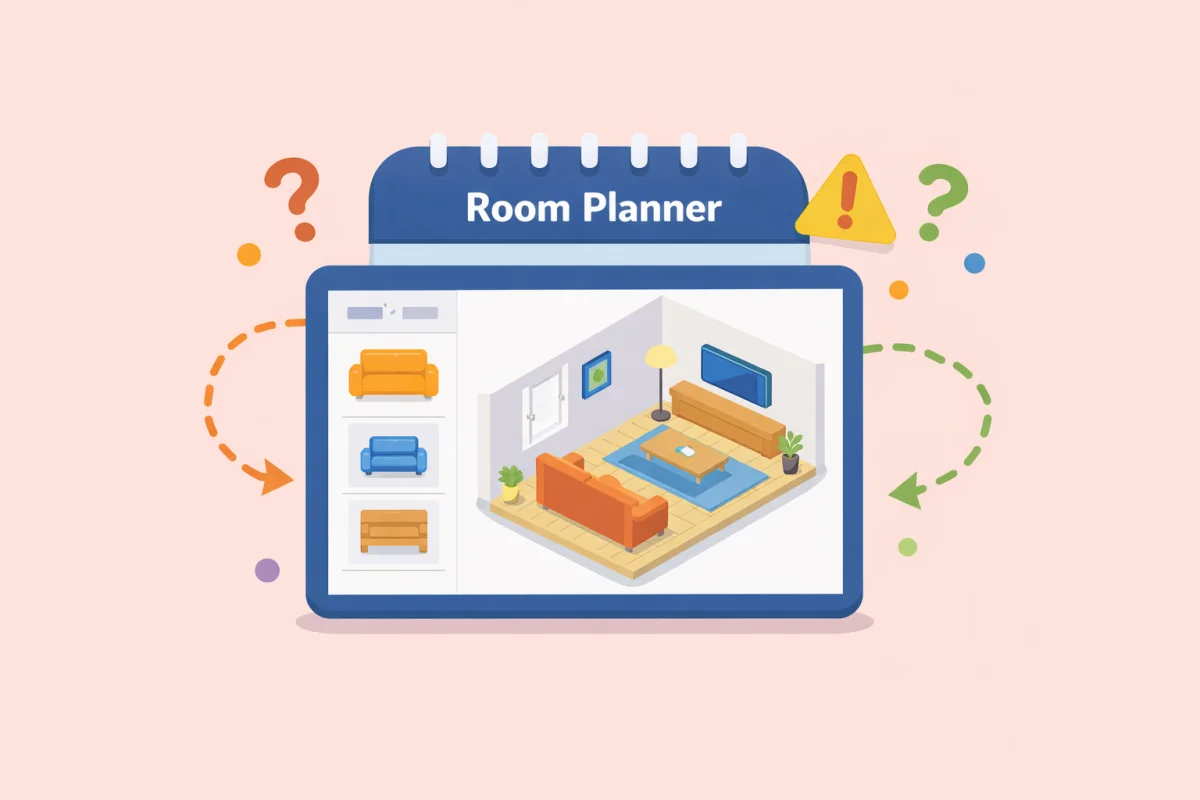
If you want to map out the space before moving furniture or buying anything, the Room Planner is built for that exact planning step.
Start With the Function, Not the Furniture
Before placing objects, decide what the room needs to do.
Ask:
- Is this room mainly for relaxing?
- eating?
- sleeping?
- working?
- storing things?
- hosting guests?
The answer changes the layout priorities immediately.
A living room designed around conversation does not use the same layout logic as one designed around a TV. A bedroom with a workspace needs different clearance than one focused only on sleep and storage.
Measure the Room Before You Plan Anything
This sounds obvious, but it is where many bad layouts begin.
You need the real dimensions of:
- wall lengths
- doors
- windows
- radiators
- built-ins
- awkward corners or alcoves
Without that information, layout becomes guesswork dressed up as design.
The point of planning is not to imagine the room. It is to test whether the space actually supports the arrangement you want.
Think in Zones, Not Just Objects
One of the easiest ways to improve a layout is to think in use zones.
Examples:
- seating zone
- dining zone
- work zone
- storage zone
- walkway zone
This helps prevent the common mistake of placing furniture based only on available wall space rather than on how people will actually move and live in the room.
Leave Space for Movement
This is where many layouts fail.
People often ask:
- “Does it fit?”
The better question is:
- “Can people move around it comfortably?”
A room can technically contain furniture while still feeling frustrating, tight, and awkward.
The layout needs:
- clear walking paths
- accessible doors and drawers
- enough breathing room around major pieces
Good layouts feel easier to use, not just fuller.
Why Scale Is More Important Than People Expect
Large rooms can handle larger furniture. Small rooms need more restraint. But the problem is not only size. It is proportion.
A piece can fit dimensionally and still feel wrong because:
- it dominates the room visually
- it shrinks circulation space
- it makes smaller surrounding pieces look accidental
This is why room planning should happen before purchase, not after.
Common Room Layout Mistakes
1. Pushing Everything Against the Walls
People often do this hoping to create more space, but it can make a room feel disconnected or awkward depending on the size and shape of the room.
2. Buying Furniture Before Testing the Arrangement
This reverses the right order. The room should inform the purchase, not the other way around.
3. Ignoring Walkways
If moving through the room feels annoying, the layout is not working no matter how good it looks in photos.
4. Treating the Room as One Big Empty Box
Real rooms have doors, windows, light sources, and purpose. Layout needs to respond to all of them.
A Better Way to Plan
The most practical sequence is:
1. measure the room 2. identify the room’s main function 3. decide the anchor piece 4. build the rest of the layout around use zones and movement 5. test before buying or moving everything
That process saves money and prevents a lot of frustrating trial and error.
Why a Room Planner Helps
A room planner is useful because it lets you test ideas before committing.
That means you can:
- check spacing
- compare layout options
- avoid oversized purchases
- see whether the room supports the way you want to use it
It turns the layout from a mental sketch into something more concrete.
Final Takeaway
If you want to plan a room layout before buying furniture, start with the room’s function, measure the real space, think in zones, and protect movement just as much as style. Good layouts make rooms easier to live in, not just nicer to look at.
Use the Room Planner to test layouts before making furniture decisions, especially when the cost of getting it wrong is high.