How to Layout a Studio Apartment — Zones, Furniture, and Space Rules
A studio apartment is a furniture placement challenge where everything matters more than it would in a larger home. There are no walls to bail you out. Every piece of furniture occupies shared visual and physical space. A bed in the wrong position doesn't just affect the bedroom — it affects the living area, the walkway, and how the whole space reads.
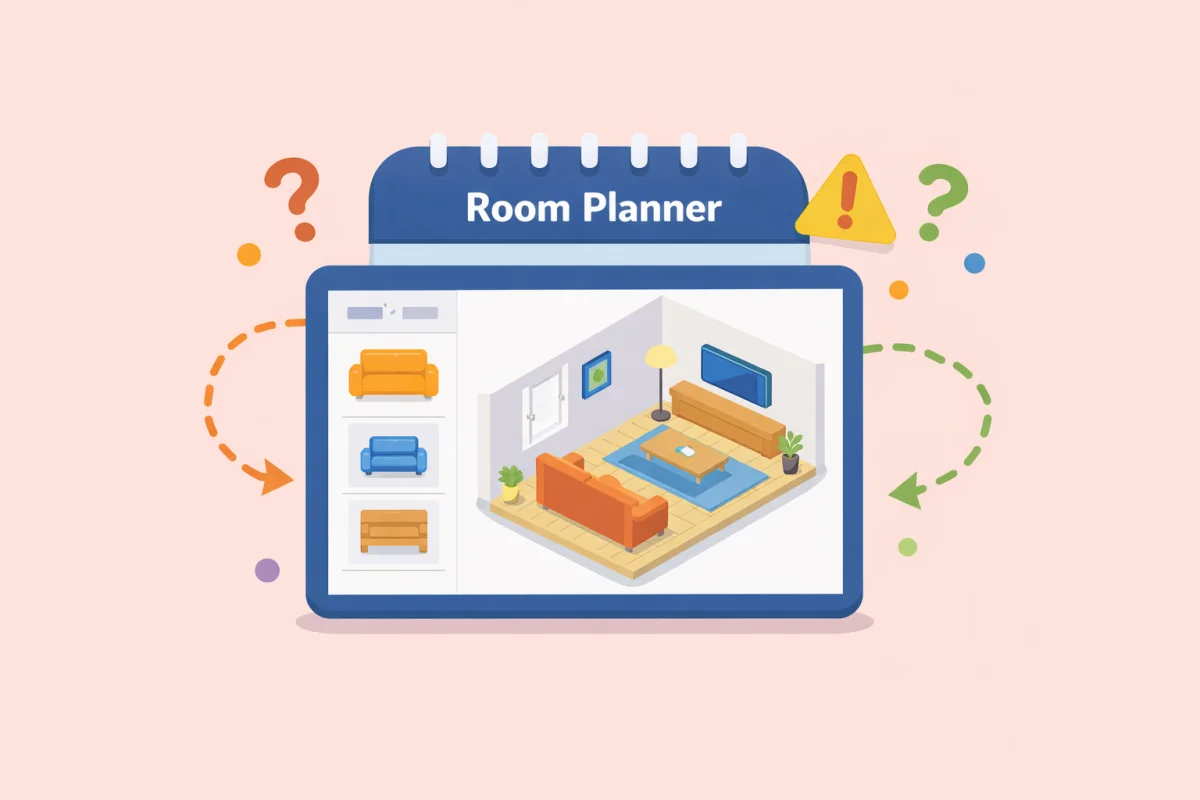
The Room Planner is useful here because you can test different zone arrangements before committing to buying or moving anything. This article walks through the principles for laying out a studio, room by room, in a space that has no rooms.
The First Decision: Zone Planning
Before placing any furniture, decide on zones. A typical studio needs at least three:
1. Sleeping zone — where the bed goes 2. Living/seating zone — sofa, chairs, coffee table 3. Work zone (if needed) — desk and chair
Cooking and dining are usually fixed by the kitchen layout you inherit, unless you are doing a full renovation.
The goal of zone planning is not to create barriers between areas — you cannot, in a studio — but to create visual groupings that read as distinct areas. When you look at a well-planned studio, your eye naturally travels between zones without the layout feeling chaotic.
Where to Put the Bed
The bed is the largest piece of furniture in a studio and the one most likely to dominate the space if placed carelessly. Three placement principles:
Keep it away from the front door. Walking directly into a visible bed makes a studio feel like a hotel room. If you can position the bed so the first view from the entrance is the living zone, the apartment reads as a home, not a bedroom with furniture in it.
Use the bed as a zone divider. A bed placed perpendicular to a wall — with the headboard against the wall and the foot facing the room — creates a natural visual boundary. The space beyond the foot of the bed becomes the living zone.
Consider a partial visual divider. A low bookshelf, a sofa with its back toward the sleeping zone, or a floor-to-ceiling curtain rail can create a soft separation without actual walls. This gives the sleeping area a sense of privacy without dividing the light.
What to avoid: placing the bed in the centre of the room unless you have enough space on all sides (at least 60cm clearance). Centre placement with insufficient clearance makes a small studio feel like an obstacle course.
Setting Up the Living Zone
In a studio, the living zone typically occupies the space farthest from the bed — often opposite or adjacent to the main windows.
Anchor it with a sofa facing a focal point. The focal point is usually a TV, a window, or a fireplace if one exists. A sofa facing nothing in particular creates a floating, purposeless zone.
Use a rug to define the zone. A rug underneath the seating area physically delineates it from the rest of the floor, even when there is no wall. The rug does not need to be large — it just needs to be under or in front of the sofa and coffee table.
Keep the sofa proportionate. A large 3-seater in a 30 m² studio will overwhelm the space. A 2-seater or apartment-sized sofa (typically under 180 cm wide) works better. In a very small studio, two armchairs instead of a sofa can provide more spatial flexibility.
The Work Zone
If you work from home, a desk in the living area is almost inevitable in a studio. A few placement strategies:
Face the desk toward a wall or window, not the room. Facing outward means the back of the desk and the visual clutter of a work setup is what anyone entering the apartment sees first. Facing a wall or window puts the work area visually out of the main sightlines.
Use the desk as a zone boundary. A desk placed at the edge of the living zone, perpendicular to a wall, creates a natural edge for both zones without taking up extra floor space.
Keep cables managed. In a studio, the work zone is always visible. Cable clutter in an open space looks messier than it would in a dedicated room.
Furniture Scale: The Most Common Studio Mistake
The most frequent mistake in studio layouts is using furniture that is sized for a larger space. A king-size bed in a 25 m² studio leaves almost no room for anything else. A large dining table for six in a space that needs to also be a living room takes up disproportionate floor area.
Studio-appropriate scale guidelines:
- Bed: A double (full) or queen rather than a king. A full is 135 × 190 cm; a queen is 153 × 203 cm. King is 183 × 203 cm — usually too large for a studio under 40 m².
- Sofa: 160–180 cm wide. Avoid sectionals in studios under 35 m².
- Dining: If space is very tight, a drop-leaf or extending table serves as a desk most of the time and expands for guests. A 2-person table is usually enough for solo or couple living.
- Storage: Vertical storage (floor-to-ceiling shelving) maximises storage without occupying floor area.
Using the Room Planner for Studio Layouts
The Room Planner is particularly useful for studios because the zone interactions are harder to visualise mentally than in a standard multi-room apartment. When every piece of furniture affects every zone, you need to test the whole layout as a system.
Steps for planning a studio layout in the tool:
1. Enter the exact room dimensions, including the location of windows, door, and any fixed features like kitchen counters or pillars 2. Place the bed first — try two or three positions and compare 3. Add the sofa and create the living zone, noting the clearance between bed and sofa 4. Add a desk if needed and confirm there is a usable walkway from entry to each zone 5. Check that the main entry door can open without being blocked by furniture
A layout that looks fine on paper sometimes reveals clearance problems only when you can see the 3D relationships between pieces. The isometric view in the planner helps judge whether zones feel distinct and whether the space flows.
Clearance Minimums for Studio Layouts
These are the minimum clearances to keep a studio functional:
| Area | Minimum clearance |
|---|---|
| Bed sides (one accessible side minimum) | 60 cm |
| Between bed and sofa / zone separator | 90 cm |
| Main walkway through apartment | 90 cm |
| Sofa to coffee table | 45 cm |
| Around dining table (pulling chairs out) | 75–90 cm |
| Desk chair (pulling out, sitting, standing) | 90 cm behind |
In a very small studio, you may not be able to meet all of these. In that case, prioritise the main walkway and bed access — those affect daily function more than any other clearance.