How to Layout a Kids' Bedroom for Both Play and Sleep
A children's bedroom is doing two jobs at once. It needs to be calm enough to sleep in and engaging enough to play in — and in most homes, both of those happen in the same small room. Getting the layout right makes a real difference to how well the room functions and how much time you spend tripping over things.
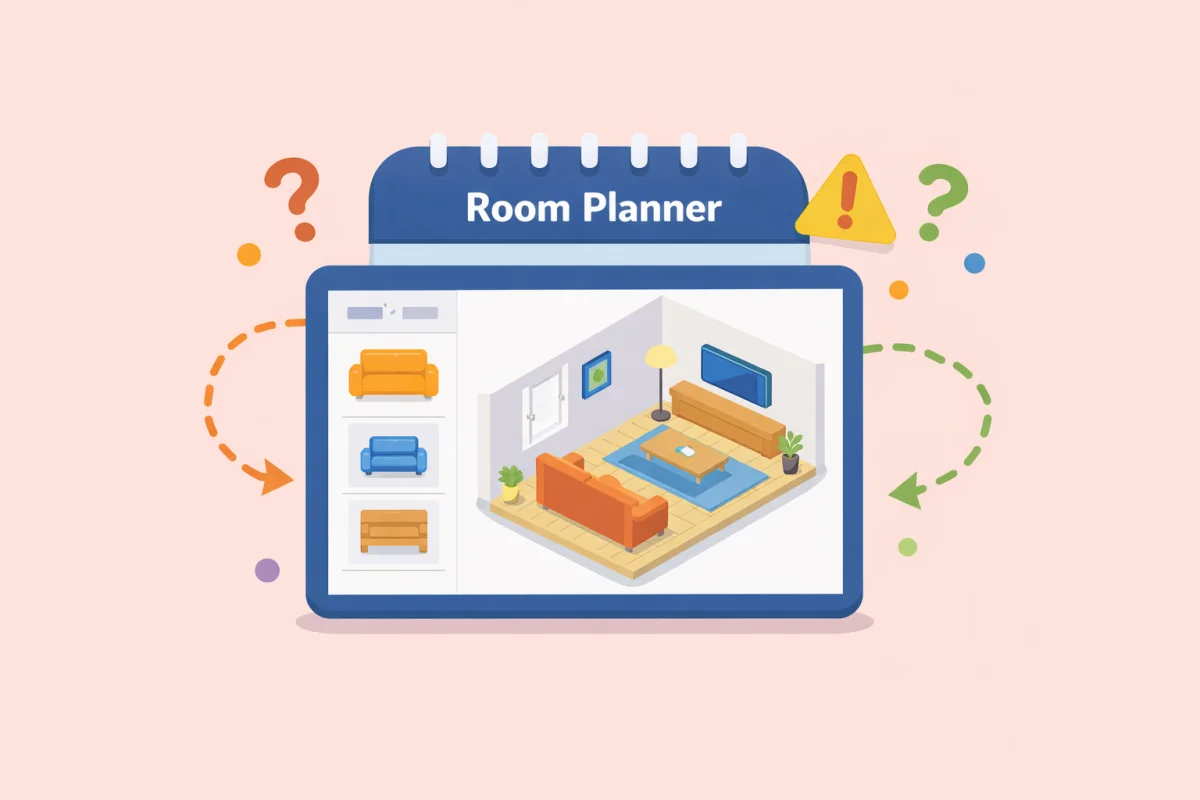
The Room Planner lets you test furniture arrangements in 3D before moving anything. This article covers the specific considerations for kids' rooms: zone planning, clearance minimums, furniture sizing, and common mistakes.
The Core Challenge: Two Zones in One Room
Adult bedrooms have one primary purpose. Children's bedrooms often have three: sleeping, playing, and usually some kind of reading or quiet activity. The layout has to support all of them without making the room feel chaotic.
The practical approach is to think in zones from the start:
Sleep zone — the bed and any associated storage (bedside table, under-bed drawers). This zone should feel quieter and, in bigger rooms, slightly separated from the activity zones.
Play zone — floor space for playing, toy storage, and enough clearance to actually use the floor. This needs to be unobstructed and easy to tidy.
Study/reading zone — for older children, a desk or reading chair. For younger children, this might just be a low bookshelf and enough floor space to sit and look at books.
In small rooms (under 9–10 m²), these zones will overlap significantly. The goal shifts to minimizing conflict between them rather than fully separating them.
Start With the Bed: Placement Options
The bed is the largest piece, so it anchors everything else.
Against a wall — the most space-efficient option. Positioning the head of the bed against a wall and one long side against another wall maximizes usable floor space. This works well for smaller rooms where every square meter counts.
Parallel to a wall with access from both sides — better for older children who are more independent and need easy access without climbing over things. Requires at least 60 cm of clear space on the side facing the room.
Loft or bunk bed — creates usable floor space underneath. A loft bed with desk or storage below is an efficient solution for rooms with 2.4m+ ceiling height. Bunk beds work for shared rooms but require careful positioning to ensure ladder access is safe and practical.
Away from the window — worth avoiding if possible. Direct sunlight on the bed makes morning sleep harder and afternoon naps impossible without blackout blinds. In rooms where the window position limits options, blackout blinds or curtains become more important.
How Much Floor Space Does a Child Actually Need?
Play needs unobstructed floor space, not just total room size. A 10 m² room with a large wardrobe, oversized bookshelf, and double bed in the wrong positions can leave almost no clear floor.
Rough targets for usable play floor (excluding furniture footprints):
| Age group | Suggested minimum floor space |
|---|---|
| Toddler (1–3 years) | 3–4 m² of clear floor |
| Young child (4–7 years) | 2–3 m² (activity moves to external play more) |
| Older child (8–12 years) | 1.5–2 m² plus desk space |
Toddlers need the most floor space because floor play (blocks, trains, imaginative setups) is their primary activity. Older children shift toward desk work, reading, and screen activities, so the balance tips toward having a proper desk area.
Toy Storage: Built-In vs Freestanding
Toy storage placement affects both how the room looks and how easy it is to keep tidy.
Low open shelving or cube storage (up to about 80 cm high) works well for young children because they can reach it themselves and see what's there. Keeping storage low also makes the room feel larger. IKEA Kallax-style shelving at 77 cm high is near the standard for this.
Tall wardrobes or bookshelves are more space-efficient in terms of volume but need to be anchored to the wall (anti-tip straps) for safety. Position them against a wall where they won't block natural light or sightlines from the doorway.
Under-bed storage is one of the best space savers in small rooms — especially with a raised bed frame that provides around 30 cm of clearance. Pull-out drawers or boxes can hold toys, extra bedding, or seasonal items.
Desk Placement for Older Children
Once children are school-age, a desk becomes important. The placement principles are similar to a home office:
- Position for side light rather than backlight or front glare. A window directly ahead of the desk creates screen glare; a window to the side provides useful natural light without it.
- Leave at least 60–90 cm of space behind the desk chair so it can be pushed back fully.
- Keep the desk away from the bed if possible. Separating work/study from sleep helps both concentration and sleep hygiene.
In a room that's too small for a separate desk, a fold-down desk mounted on the wall can work. When folded up, it returns floor space; when down, it provides a proper work surface.
Clearance Minimums to Keep in Mind
| Location | Minimum clearance |
|---|---|
| Bed access (main side) | 60 cm |
| Wardrobe door swing | 60 cm (or depth of wardrobe) |
| Between pieces of furniture | 45–60 cm |
| Loft/bunk ladder | 60 cm wide clear |
| Door swing | Full arc clear |
The door arc is often forgotten in planning. If the door opens inward and there's a dresser positioned behind it, the dresser can only go so deep before it blocks the door. Check this before placing anything behind the door.
Shared Bedrooms: Two Children in One Room
Shared rooms add the challenge of giving each child enough defined space without wasting the room's total area.
Bunk beds are the most space-efficient sleeping solution. A standard bunk pair occupies roughly the same floor area as one single bed (about 0.9 × 2.0 m).
Beyond sleeping, each child benefits from a designated storage area (separate shelves, separate side of the wardrobe) and, for older children, some separation between study areas. In rooms under 12 m², this is challenging — prioritize the sleep and study zones, and accept that play will happen in common areas.
For rooms with enough width, placing two single beds along opposite walls with a shared zone in the middle gives each child a clear side while maintaining usable floor space in the center.
Testing the Layout Before Moving Furniture
Children's bedroom furniture tends to be bulkier than it looks and harder to rearrange once you've committed to it — especially when beds are against walls and wardrobes are heavy.
Sketch the room dimensions and test a few configurations in the Room Planner before moving anything. Key things to verify:
1. Is there enough clear floor in the play zone after all furniture is placed? 2. Does the bed placement block the window or door? 3. Can the wardrobe door open fully without hitting another piece? 4. Is there a clear path from the bed to the door — important both for nighttime trips to the bathroom and for fire safety?
Getting these right on a screen takes 15 minutes. Getting them wrong with heavy furniture takes considerably longer.