How to Layout a Guest Bedroom That Doubles as an Office
The guest bedroom that doubles as a home office is one of the most common layout problems people run into. You have one room, two competing purposes, and both of them need to work properly. If you get the layout wrong, you end up with a room that functions poorly as both — a workspace that doesn't feel professional and a guest space that doesn't feel welcoming.
Done right, a dual-purpose room is genuinely usable. The key is to design for both functions deliberately rather than just cramming a desk into the corner of a bedroom and calling it done.
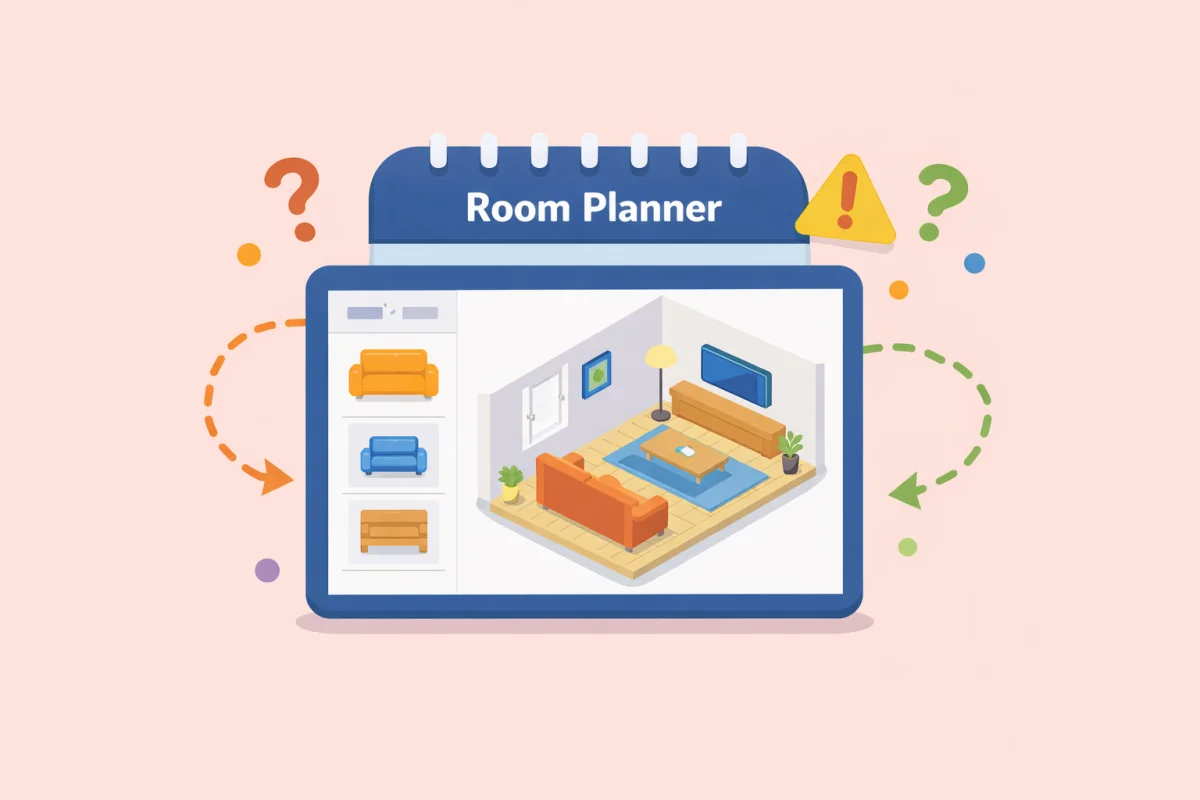
Plan your layout before buying or moving anything with the Room Planner.
The Core Challenge: Two Functions, One Space
A home office needs a desk, ideally placed for good light, away from distracting sightlines, with enough space to work comfortably. A guest bedroom needs a bed that feels welcoming, storage for guests' belongings, and enough clear floor space that the room doesn't feel cramped.
These two sets of requirements don't naturally conflict, but they do require planning. The desk is the thing that tends to create problems. If it's in the wrong position, it either dominates the room visually when guests are using the space, or it ends up in a position that doesn't work well for focused work.
The good news: most 10×10 ft (3×3 m) or larger rooms can accommodate both functions. Smaller rooms are doable but require more considered furniture choices.
Bed First, Desk Second
The bed is larger and less flexible in terms of placement, so figure out where it goes first. A queen bed is typically 153×203 cm; a full/double is 137×191 cm. In a 3×3 m room, a queen bed takes up a significant portion of the space — measure carefully.
For a dual-purpose room, a daybed or a sofa bed is worth considering. A daybed (roughly 90×200 cm) looks like a couch or chaise when not in use for sleeping, which reduces the visual "bedroom" feel during work hours. The room reads as an office with seating rather than a bedroom with a desk shoehorned in. The tradeoff is sleeping comfort — a good quality sofa bed addresses this but costs more.
If you're keeping a standard bed, a full-size rather than queen will free up meaningful floor space for the desk and movement area. In a 10×12 ft room, the difference between a full and queen is enough to comfortably fit a larger desk or add a small storage piece.
Where to Put the Desk
The desk placement is what makes or breaks this layout. A few principles:
Near a window, but not facing into it. Facing a window directly creates screen glare and eye strain. Placing the desk perpendicular to the window — with the light coming from the side — is usually the best configuration. You get natural light without fighting glare.
Positioned so the camera view is neutral. If you take video calls, think about what's behind you. A desk facing a blank wall gives you control over your background. A desk facing into the room puts the bed directly in the camera frame — which looks unprofessional during work calls and takes some effort to solve with virtual backgrounds or rearranging.
Separated from the sleeping area. Even a subtle physical or visual separation helps both functions. This can be as simple as placing the desk on a different wall than the bed, or using a bookshelf or open shelving unit as a partial divider. The goal is that the room doesn't feel like a desk sitting in the middle of a bedroom.
Creating Visual Separation Without a Wall
In rooms without enough space for a physical divider, you can create the sense of two zones through other means.
A rug under the desk area establishes the workspace as a distinct zone. A different pendant light or task lamp over the desk reinforces this. If the desk chair and bed are in the same sightline, a small bookshelf or tall plant between them creates enough visual break that both areas feel intentional.
Color can help too. Painting the wall behind the desk a different shade — even a subtle variation — designates it as the work wall. This is a common trick in studio apartments and works equally well in a dual-purpose room.
Storage That Serves Both Functions
A dual-purpose room benefits from storage that works for both uses. A wardrobe with hanging space is essential for guests; it also works for storing office supplies if you add shelving to one section. A chest of drawers can store both office materials and spare linens.
Avoid using the desk itself as general storage. A cluttered desk makes the room feel like a dumping ground rather than a workspace, and guests have nowhere to put anything. Keep desk storage organized and contained — a set of matching boxes or a small filing cabinet beats an open pile of papers.
Making Guests Feel Welcome in an Office Room
The main risk with a home office guest room is that guests feel like they're sleeping in your workspace rather than a space designed for them. A few things that help:
Clear the desk before guests arrive. Store work-in-progress materials, paperwork, and personal items out of sight. A guest who has to move your things to find a surface isn't feeling particularly welcomed.
Add a mirror and some hooks near the bed or wardrobe. Guests need to get dressed and ready in the morning, and small additions like these make a functional difference.
Good window coverings matter more in a guest room than a dedicated office. Guests may want to sleep in or need darkness during the day — blackout curtains or a good blind is worth the investment.
A lamp beside the bed is more guest-friendly than relying on the overhead light. This is especially true if the desk lamp is on the other side of the room.
Room Dimensions and Layout Examples
10×10 ft (3×3 m) room: Tight but workable with a full-size bed and a compact desk (90–120 cm wide). The desk works best on the wall opposite or perpendicular to the bed. Keep the path between the door, desk, and bed clear — 60 cm minimum.
10×12 ft (3×3.7 m) room: Queen bed and a decent desk (120–150 cm) can coexist. You may be able to add a chair or small wardrobe without feeling crowded.
12×12 ft (3.7×3.7 m) room: Comfortable for a queen bed, a proper L-shaped or large desk, and a wardrobe. You can create a more defined separation between zones.
Try the Room Planner to map out your specific dimensions before deciding on furniture sizes. The isometric view makes it easier to judge whether the room will feel balanced with both pieces in place, rather than finding out after the furniture is in the room that the layout doesn't work.
What to Prioritize If You're Short on Space
If the room is genuinely small and something has to give, prioritize function over form:
- A comfortable sleeping surface beats a stylish one
- A properly positioned desk beats a larger desk in a bad spot
- Clear walkways beat fitting in more furniture
A 3×3 m room with a daybed, a 90 cm desk, and one wardrobe can work well for both purposes. A 3×3 m room crammed with a queen bed, a large L-shaped desk, a wardrobe, and a dresser works well for neither.