How to Arrange a Small Living Room with a Sectional Sofa
Sectional sofas are appealing because they offer a lot of seating and a relaxed, generous feel. The problem in a small living room is that a sectional occupies a significant footprint, and placing it wrong makes the space feel like a furniture warehouse rather than a comfortable room.
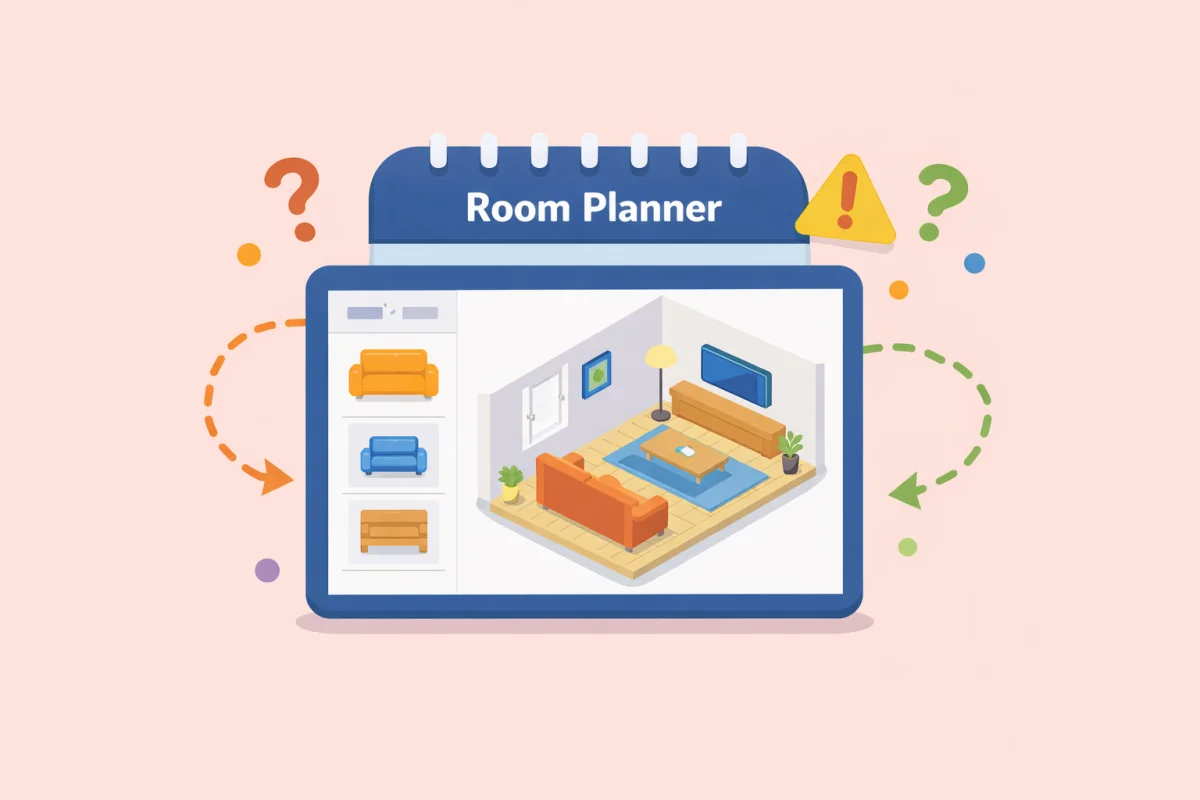
The good news is that a small room with a sectional can work extremely well — often better than the same room with a traditional sofa-and-armchair arrangement — if you think carefully about configuration and clearance. The Room Planner lets you test different placements before moving anything.
Which Sectional Configuration Works in a Small Room
Sectionals come in two main configurations: L-shaped and U-shaped. A U-shaped sectional needs a genuinely large room and almost never works in a small one — it eats too much floorspace and tends to block movement.
For small rooms, an L-shaped sectional is the one to work with. The two variants are:
Left-hand facing (LHF): The longer section extends to the left when you face the sofa. The shorter "chaise" or arm section is on the right.
Right-hand facing (RHF): The reverse.
Which version you need depends entirely on your room's shape and where the entry points, windows, and focal point (TV, fireplace) are. This is something worth testing before you commit to buying, since returns on large furniture are often difficult.
Placement Principles for a Sectional in a Small Room
Put it in a corner — but not touching the walls
The most natural place for an L-shaped sectional is in a corner. The shape of the sofa mirrors the shape of a corner, so they work together to define a seating zone without fighting the room's geometry.
But avoid pushing the sofa flush against both walls. A 10–15 cm gap behind the sofa and along the side wall makes the room feel less cramped and allows for cleaning. It also prevents the sectional from looking like it was crammed in rather than placed intentionally.
Check clearance in front of the main section
The longer section of the sofa — the main seating part — needs clearance in front of it for leg room, a coffee table, and a walkway. As a minimum:
- 45 cm of knee space between the sofa edge and coffee table
- 90 cm from the coffee table to the TV or far wall for movement
- 90 cm walkway if the sofa creates a path through the room
In a small room, that full 90 cm clearance in front of the sofa is sometimes not achievable without moving the sofa itself closer to one wall. If you cannot achieve 90 cm, aim for at least 75 cm.
Watch where the chaise points
The chaise end (the extended footrest section) sticks out further than the main sofa body. If it points toward a door, a window, or the main walkway through the room, it will obstruct traffic flow. Ideally the chaise should point into the room and away from the primary path people take when entering or moving through the space.
Use a smaller coffee table than you think you need
A large square coffee table in front of a sectional in a small room is a common mistake. You end up with a wide sofa, a large table, and almost no room to move. Consider:
- A round coffee table, which allows people to walk around it more easily
- Two smaller side tables instead of one central one
- A storage ottoman at the chaise end instead of a traditional table — it is multi-functional and easier to move
Room Sizes and What Fits
Small living rooms broadly fall into a few categories:
Under 12 m² (about 10×12 ft): A full sectional is probably not the right choice here. A loveseat and a single armchair will serve the space better. If you are committed to a sectional, look at compact "apartment-sized" sectionals with a footprint under 220×140 cm.
12–18 m² (about 10×16 to 12×16 ft): An L-shaped sectional can work, but you need to test the exact layout before buying. Key question: can you maintain 90 cm in front of the main seating section and still reach the room entry without squeezing?
18–25 m² (about 13×16 to 13×20 ft): A standard L-shaped sectional fits comfortably in this range. You may even have room to pull the sofa away from the corner slightly and create a more open arrangement.
The Room Planner is useful here because you can input your exact room dimensions and test different sectional sizes before committing.
Making the Room Feel Less Closed In
A sectional in a small room risks making everything feel heavy and enclosed. A few things counteract this:
Keep the back of the sofa low. Low-back sectionals (around 75–85 cm tall) maintain sightlines across the room. High-back sectionals (90–95 cm) can make a small room feel like a series of separate compartments.
Choose a light colour or neutral fabric. A pale or mid-toned fabric recedes visually. A dark sectional in a small room dominates. If you want a bold colour, lighter walls help compensate.
Avoid a large area rug that extends under the full sofa footprint. A rug that just defines the seating area in front of the sofa works better than one large enough to go under the entire sectional — which reads as an island of furniture surrounded by visible floor.
Use vertical storage on adjacent walls. Bookshelves, wall-mounted media units, or tall shelving on the walls next to the sectional draw the eye upward and make the room feel taller.
One Configuration to Try First
If you are starting from scratch and have a room roughly 14–18 m², try this as your first test:
1. Place the L-sectional in the corner farthest from the main entry, with the longer section running along the longer wall 2. Orient the chaise so it faces into the room, not toward the entry 3. Place the TV or focal point on the wall perpendicular to the main sofa section — roughly 2–2.5 m away 4. Put a round coffee table (60–70 cm diameter) centered in front of the main seating section 5. Leave the area nearest the entry as open floor — no furniture between the door and the sofa
This creates a clear movement path into the room, a defined seating area, and enough clearance to feel comfortable without wasting space.
Test the layout using the Room Planner before physically rearranging or buying anything — it is much easier to discover a clearance problem on screen than after the sofa has been delivered.