30-Day No-Spend Challenge — Rules, Examples, and How to Start
A 30-day no-spend challenge is the fastest way to see where your money actually goes. You pick one month, draw a line between essential and non-essential spending, and for 30 days you only pay for what falls on the essential side of that line. No coffees out, no impulse Amazon orders, no "treat yourself" dinners. The point isn't to suffer — it's to break autopilot and notice every spending decision you normally make without thinking.
Most people who try this end up surprised twice: once in the first week, when they realise how often they were reaching for their card out of boredom, and again at the end, when they see the number in their account. This guide walks through the rules, the categories that trip people up, and a realistic plan you can print and track with the 30-day-challenge generator.
What Counts as "Spending" in a No-Spend Challenge
The hardest part of a no-spend month isn't the discipline — it's deciding the rules before you start. If you wait until day 6 to decide whether your gym membership counts, you'll talk yourself into whatever answer is convenient in the moment. Write the rules down on day zero.
A workable default split looks like this:
- Allowed (essentials): rent or mortgage, utilities, groceries, transport to work, existing subscriptions you already pay, medical costs, debt payments, childcare.
- Not allowed (non-essentials): restaurants, takeout, coffee shops, clothing, new electronics, books, streaming upgrades, hobby purchases, alcohol, gifts (unless for a fixed event already on the calendar), home decor, any "while I'm here" purchase.
The grey zone is where people negotiate their way out of the challenge. A haircut you were already going to get this month? Allowed. A new pair of "running shoes because mine are worn" when the old ones have 200 miles left? Not allowed. The test: would you have bought this exact thing this week if you weren't in a challenge? If the answer is no, it's a non-essential.
Three Versions of the Challenge
Not everyone needs the strict version, and not everyone benefits from it. Pick the intensity that matches your situation.
Level 1: Category no-spend
Pick one category and cut it to zero for 30 days. Common picks are restaurants, coffee out, online shopping, or takeout. This is the version to start with if you've never done one of these before. It's specific, easy to measure, and the savings are obvious — if you normally spend £120/month on delivery food, you'll see £120 stay in your account.
Level 2: Standard no-spend month
No non-essentials at all, using the list above. Groceries and bills continue as normal. This is the version most people mean when they say "no-spend month." Expect the first 10 days to be harder than the last 10 — once the habit of not reaching for your card forms, it gets quieter.
Level 3: Low-spend with a cash cap
A fixed small allowance (say £50 or £100 for the whole month) for non-essentials. This is better than a strict no-spend if you have a birthday, a dinner you can't skip, or you know "zero" will make you quit on day 4. The cap forces prioritisation instead of total abstinence.
The Real Reason These Challenges Work
Saving money is only half of the benefit. The other half is data. For 30 days you're forced to pay attention to every non-grocery transaction, which means you end the month with an accurate picture of your discretionary spending — something most budgeting apps struggle to give you, because they track what you did spend, not what you almost spent.
By the end of a no-spend month, most people can answer questions they couldn't answer before:
1. Which purchases did I miss? (Those are the ones worth keeping after the challenge.) 2. Which purchases did I not miss at all? (Those are pure leak — cut them permanently.) 3. When am I most likely to spend impulsively? (Friday evenings? After a stressful meeting? Late-night scrolling?)
That third answer is the one that changes behaviour long after the challenge ends.
A Realistic 30-Day Plan
Treating the month as one long slog is how most attempts collapse around day 12. Break it into shorter stretches with a specific focus for each.
Days 1–3: Setup. Unsubscribe from promotional emails. Delete shopping apps from your phone — you can reinstall them on day 31. Cancel any free trials that are about to auto-renew. Cook something for the first few days so you're not tempted on day 2.
Days 4–10: The noise week. This is when impulses peak. You'll reach for your phone to order something and catch yourself mid-tap. Every time that happens, write it down. One line: what you almost bought, and what triggered it.
Days 11–20: The quiet middle. The urges thin out. Use the time to do the things you normally pay to avoid — cook properly, walk instead of taking the bus where it's reasonable, read books you already own. This is also the week where social pressure shows up, because someone will invite you to something that costs money. Have a cheap or free counter-offer ready.
Days 21–30: The finish. By now you've probably saved more than you expected. The risk in the last stretch is a "reward spend" — booking something expensive for day 31 to celebrate. Don't. Let the challenge end quietly and decide what to reintroduce based on what you actually missed.
Common Traps
A few predictable ways these challenges fail, and how to avoid each one.
- Stockpiling on day 0. Buying four pairs of jeans the night before you start is not a no-spend month. If you need something genuinely essential, buy it in the two weeks before or after — not in the 24 hours before.
- Grocery creep. Groceries are allowed, so people accidentally move restaurant-level spending into the supermarket (premium ready meals, speciality snacks, a third bottle of wine). Set a weekly grocery budget based on a normal month and stick to it.
- Gift loopholes. "It's a gift for someone else" is a popular workaround. If the gift wasn't already on your calendar before day 1, it doesn't count as essential.
- All-or-nothing thinking. If you break the rules on day 9, the challenge isn't over. Log what happened, what triggered it, and carry on. Missing once is a data point. Quitting is the actual failure.
How to Track It Without an App
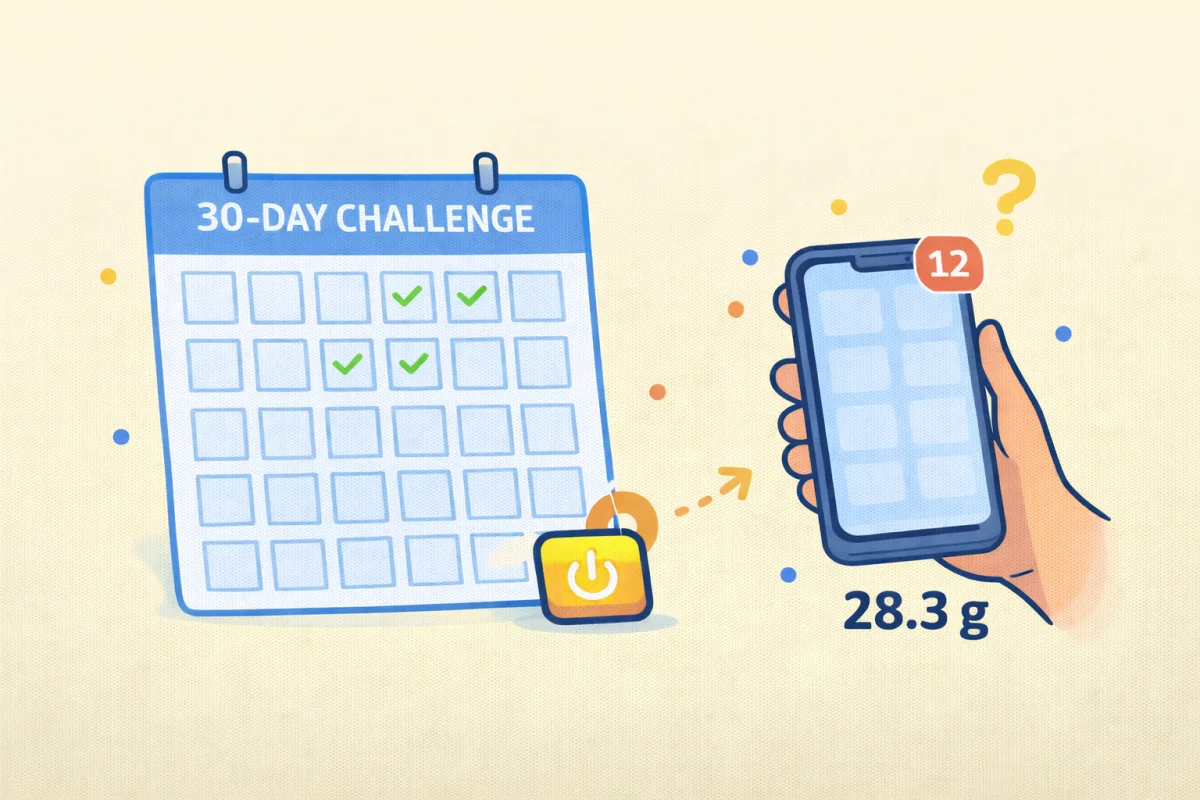
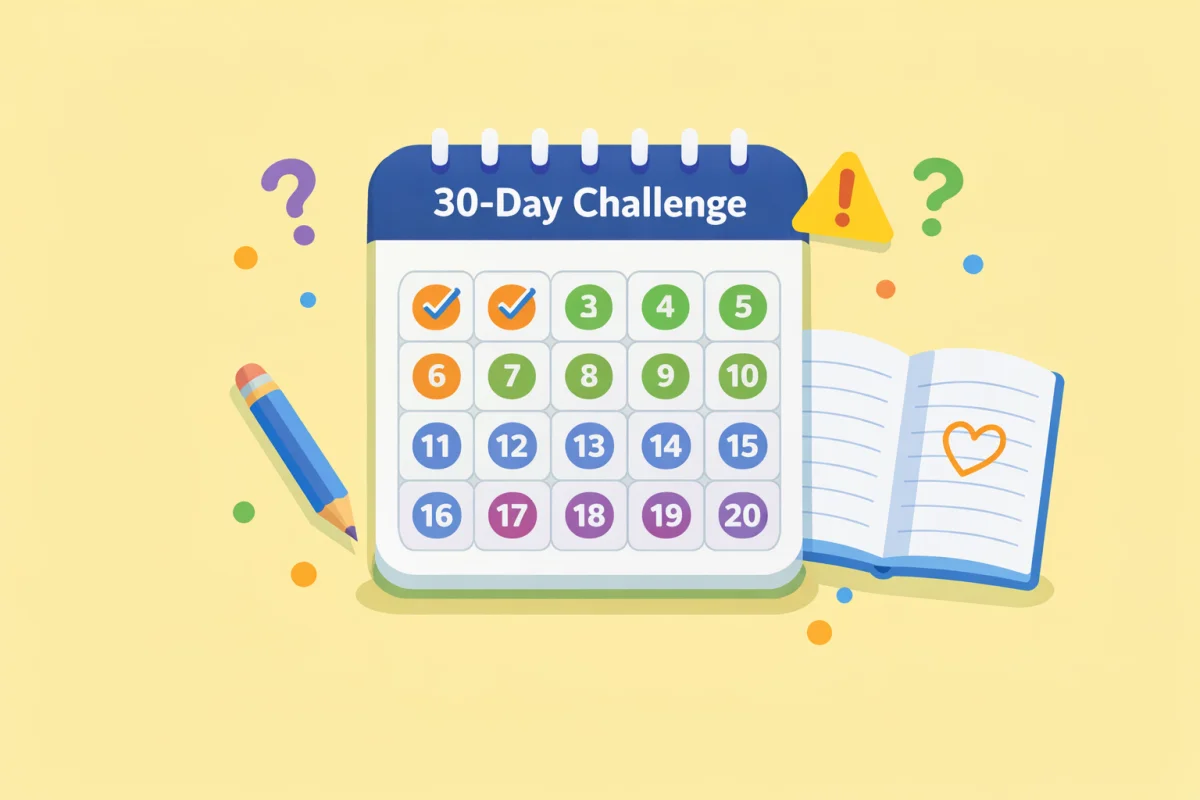
You don't need a budgeting tool for this. A printed tracker on the fridge with 30 boxes is enough — tick the box at the end of each day you stayed inside the rules, and write a single line noting anything you almost bought. At the end of the month, compare your bank statement to a normal month and calculate the difference. That one number is usually more motivating than any app dashboard.
Generate your sheet with the 30-day-challenge tool, name it whatever version you're doing ("No-Spend April," "Coffee-Out Challenge," "Low-Spend £50"), and put it somewhere you physically see every day. A challenge you can't see is a challenge you'll forget about by day 8.
After the 30 Days
The mistake most people make on day 31 is either going back to exactly how they spent before, or overcorrecting into permanent restriction. Neither works. The useful move is to look at your "almost bought" list and split it into two columns: things you genuinely missed and want back, and things you clearly didn't need. Reintroduce the first column. Leave the second column off. That's the version of your spending that survived the 30-day no-spend challenge — and it'll be noticeably cheaper than the version you started with.