Why Your TDEE Changes Over Time
If you calculated your TDEE a year ago and have been eating based on that number ever since, there is a good chance the number no longer reflects your actual needs.
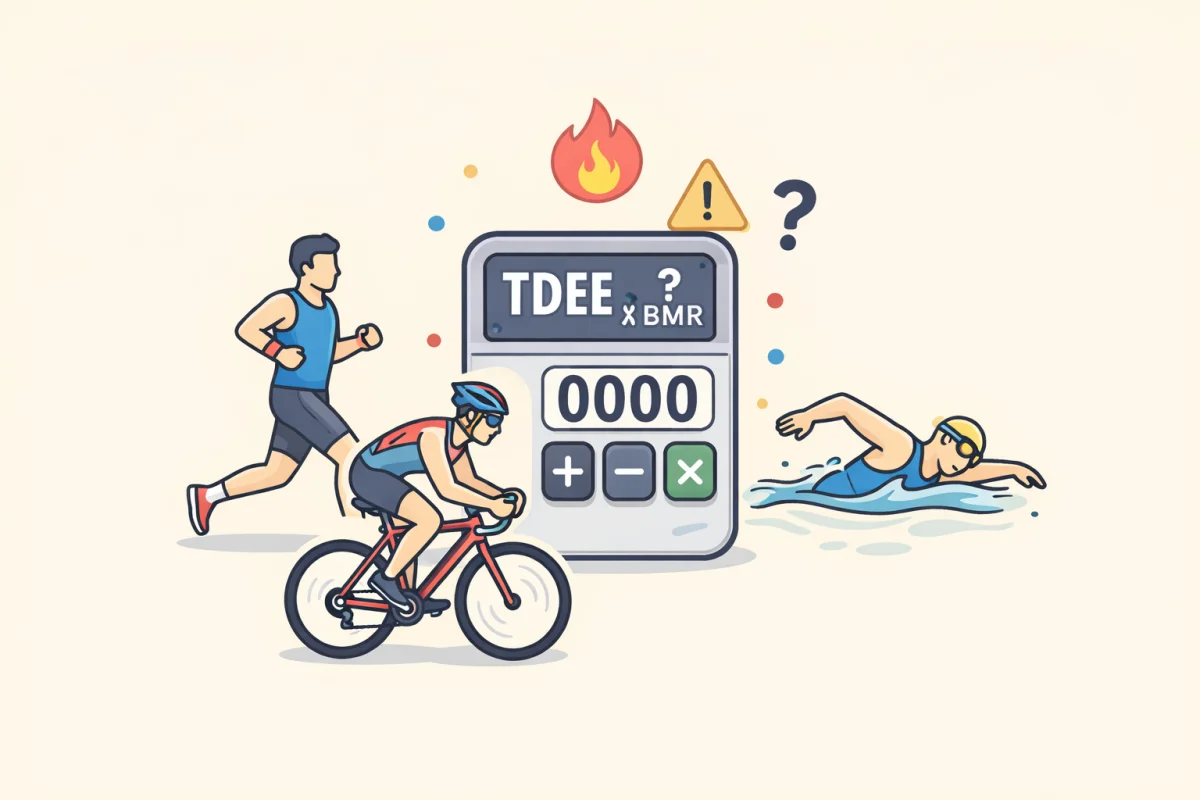
TDEE — Total Daily Energy Expenditure — is an estimate of how many calories your body burns in a day. It is based on your weight, height, age, sex, and activity level. Change any of those inputs and the output changes too.
But that is only part of the story. Even if your stats stay the same on paper, your actual calorie burn can shift in ways the standard formula does not fully capture. Understanding this is what separates people who keep making progress from people who hit a wall and cannot figure out why.
Use the TDEE Calculator to get your current estimate — then read below to understand how to interpret it over time.
The Most Obvious Reason: Your Weight Changed
The Mifflin-St Jeor equation — the most widely used formula for estimating TDEE — uses your current body weight as a key input. Heavier bodies burn more calories at rest and during activity. Lighter bodies burn less.
This means:
- If you lose weight, your TDEE drops
- If you gain muscle or body mass, your TDEE rises
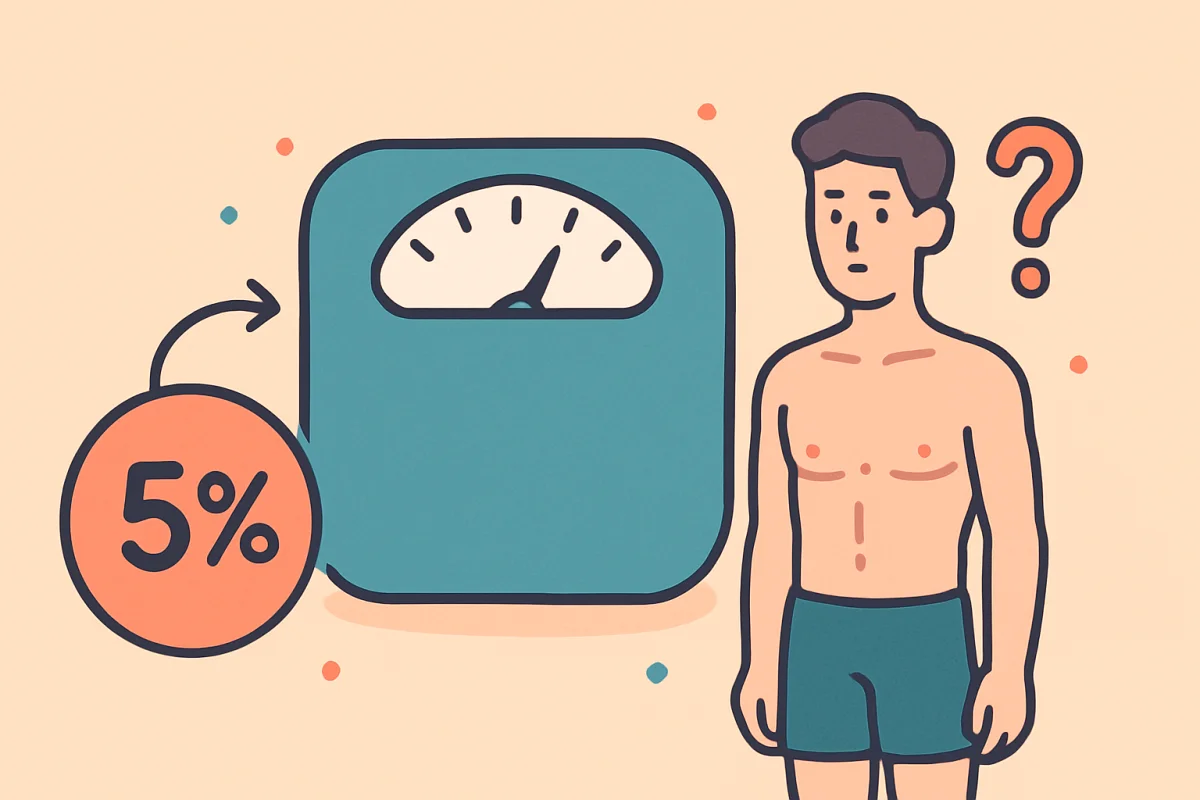
The math is not dramatic. Losing 5 kg might reduce your TDEE by 50–100 calories per day. But over months of dieting, the cumulative effect is real. Someone who started at 90 kg with a TDEE of 2,400 kcal and lost 15 kg now has a meaningfully lower TDEE — perhaps 2,100–2,200 kcal — even if everything else stayed the same.
This is why calorie targets that worked for the first few months often stop producing results later. The deficit that existed at 90 kg may have disappeared at 75 kg.
Muscle Mass Changes Your Resting Burn
Muscle tissue burns more calories at rest than fat tissue does. The difference is not enormous — roughly 13 kcal per kg of muscle per day versus about 4.5 kcal per kg of fat — but it adds up over a full body and across time.
If you lose weight through diet alone without resistance training, you will likely lose some muscle alongside fat. That reduces your resting metabolic rate beyond what the weight loss alone would cause. Two people who both weigh 75 kg can have meaningfully different TDEEs if one is 20% body fat and the other is 30%.
This is one of the stronger arguments for resistance training during a fat loss phase: preserving muscle protects your metabolic rate and makes it easier to maintain results.
Conversely, if you are building muscle through strength training, your TDEE will gradually rise even if your body weight stays the same. More muscle means more calories burned at rest — which is why experienced lifters can often eat more than untrained people of the same weight.
Age Lowers Your BMR Slowly but Consistently
Basal metabolic rate tends to decline with age. The reasons are not fully settled, but the main factors are gradual muscle loss (sarcopenia) and changes in hormonal output.
The decline is slow — roughly 1–2% per decade from middle age onward. For a 45-year-old with a BMR of 1,700 kcal, that might be 17–34 calories per decade. Not dramatic in isolation, but combined with other changes, it contributes to the common experience of weight becoming harder to manage in middle age.
Staying active and maintaining muscle mass blunts this decline substantially. The age-related BMR drop is partly the effect of aging itself and partly the effect of becoming less active and losing muscle — which is something you can influence.
Activity Level Is the Most Volatile Variable
The activity multiplier in TDEE calculations is the component that changes most dramatically and most quickly.
Standard activity categories are:
| Level | Multiplier | Typical profile |
|---|---|---|
| Sedentary | 1.2 | Desk job, minimal exercise |
| Lightly active | 1.375 | Light exercise 1–3 days/week |
| Moderately active | 1.55 | Moderate exercise 3–5 days/week |
| Very active | 1.725 | Hard exercise 6–7 days/week |
| Extra active | 1.9 | Physical job + daily training |
A sedentary person who starts exercising five days a week can increase their TDEE by 300–500 calories per day. Someone who gets injured and stops exercising can lose just as much.
The problem is that people tend to calculate their TDEE at one activity level and then let life drift without recalculating. A desk worker who takes a physically demanding summer job needs more calories. A competitive runner who stops training after a race needs fewer.
Metabolic Adaptation: The Less Obvious Factor
This is where things get interesting — and where the standard formula starts to miss something.
When you are in a sustained caloric deficit, your body does not simply burn through fat at a fixed rate. It adapts. The adaptations include:
- Reduced NEAT (non-exercise activity thermogenesis): You move less unconsciously. Fidgeting decreases. You take the elevator instead of the stairs without noticing. Small movements throughout the day add up to 200–400 fewer calories burned per day.
- Reduced exercise efficiency: Your body becomes more efficient at the same movements, burning fewer calories for the same workout over time.
- Hormonal shifts: Leptin drops, thyroid output decreases slightly, and hunger hormones increase — all pushing toward lower energy expenditure and higher food intake.
Together, these adaptations mean your actual TDEE during a prolonged diet is often 10–20% lower than the formula predicts. A person whose calculator says 2,000 kcal may genuinely be burning 1,700–1,800 kcal after several months of dieting.
This is the main mechanistic reason behind weight loss plateaus. The deficit that worked at week four may have closed almost entirely by week sixteen — not because of willpower, but because the body adapted to protect against further weight loss.
How Often Should You Recalculate?
A reasonable rule: recalculate your TDEE whenever something meaningful changes.
That includes:
- Losing or gaining more than 4–5 kg
- A significant change in your exercise routine (starting, stopping, or meaningfully changing volume)
- A new job or lifestyle with a different activity level
- Coming off a long diet phase (allow for some metabolic recovery before trusting the number)
For active dieters, every 4–6 weeks is a sensible interval for rechecking the inputs. For people in maintenance, recalculating once or twice a year is usually enough.
The TDEE Calculator takes less than a minute to run. Keeping the estimate current is one of the simplest ways to avoid the frustration of following a calorie target that stopped being accurate months ago.
What to Do When Progress Stalls
If your weight has been stuck for three or more weeks and you are confident you are hitting your calorie target, the likely explanations are:
1. Your TDEE has dropped due to weight loss — recalculate and adjust the target down slightly 2. Metabolic adaptation has reduced your actual burn — consider a diet break at maintenance calories for 1–2 weeks before resuming 3. The activity level you selected no longer matches reality — reassess and adjust 4. Calorie tracking has drifted — measurement errors tend to compound over time
Option 2 — a diet break — sounds counterintuitive, but there is reasonable evidence that returning to maintenance temporarily helps restore leptin levels and partially reverses some metabolic adaptation, making the next phase of dieting more effective.
If you want to cross-reference your energy needs with your macronutrient breakdown, the Macros Calculator pairs well with TDEE once you have a calorie target you trust.