Pounds and Ounces to Grams for Cooking: How to Convert Recipe Weights Correctly
One of the fastest ways to ruin a good recipe is to measure accurately in the wrong unit system.
That sounds contradictory, but it happens all the time. A baker follows a British recipe with an American scale. A home cook reads ounces when the recipe assumes fluid ounces. Someone converts pounds to grams roughly, then wonders why the dough feels wrong or the seasoning ratio seems off.
If you regularly search for ounces to grams, pounds to grams, or recipe weight conversion, this is the practical guide that helps you stop guessing.
Why Weight Conversion Matters So Much in Cooking
Cooking can survive a little approximation. Baking usually cannot.
When recipes use weight, they are doing it for a reason:
- Flour packs differently by volume
- Brown sugar compresses unevenly
- Cheese, butter, and meat vary too much for cup-based estimates
- Scaling a recipe is much cleaner with grams
That is why so many serious cooks and bakers prefer grams. The numbers are easier to scale, easier to compare, and much less ambiguous.
The Core Conversions: Ounces, Pounds, and Grams
Here are the conversions people use most often:
| Unit | Equivalent |
|---|---|
1 oz | 28.35 g |
4 oz | 113.4 g |
8 oz | 226.8 g |
16 oz | 453.59 g |
1 lb | 453.59 g |
2 lb | 907.18 g |
So if a recipe calls for:
8 oz flour→226.8 g1 lb chicken→453.59 g2 lb potatoes→907.18 g
If you want the exact number quickly, the Weight Converter handles the conversion directly.
Why Grams Usually Make Recipes Easier
Grams remove the mess from recipe math.
Instead of working with:
1 lb 6 oz3/4 oz2.25 lb
you can convert everything into a single metric unit and move faster.
That is especially useful when you:
- Halve or double recipes
- Prep in batches
- Compare recipes from different countries
- Use a digital kitchen scale
The Cooking Converter also helps when the same recipe mixes weight and kitchen volume units.
The Most Common Recipe Weight Mistakes
1. Confusing Ounces by Weight With Fluid Ounces
This is the mistake that causes the most confusion.
An ounce by weight measures mass. A fluid ounce measures volume. They are not interchangeable.
For example:
8 oz flourmeans weight8 fl oz milkmeans volume
If you convert one as though it were the other, the result can be badly wrong.
2. Rounding Too Aggressively
Rounding 28.35 g to 30 g for one ingredient may not matter. Doing it repeatedly across a baking recipe can.
For delicate doughs, pastry, bread, and cake batter, use the exact or near-exact number where possible.
3. Assuming One Cup Equals One Weight
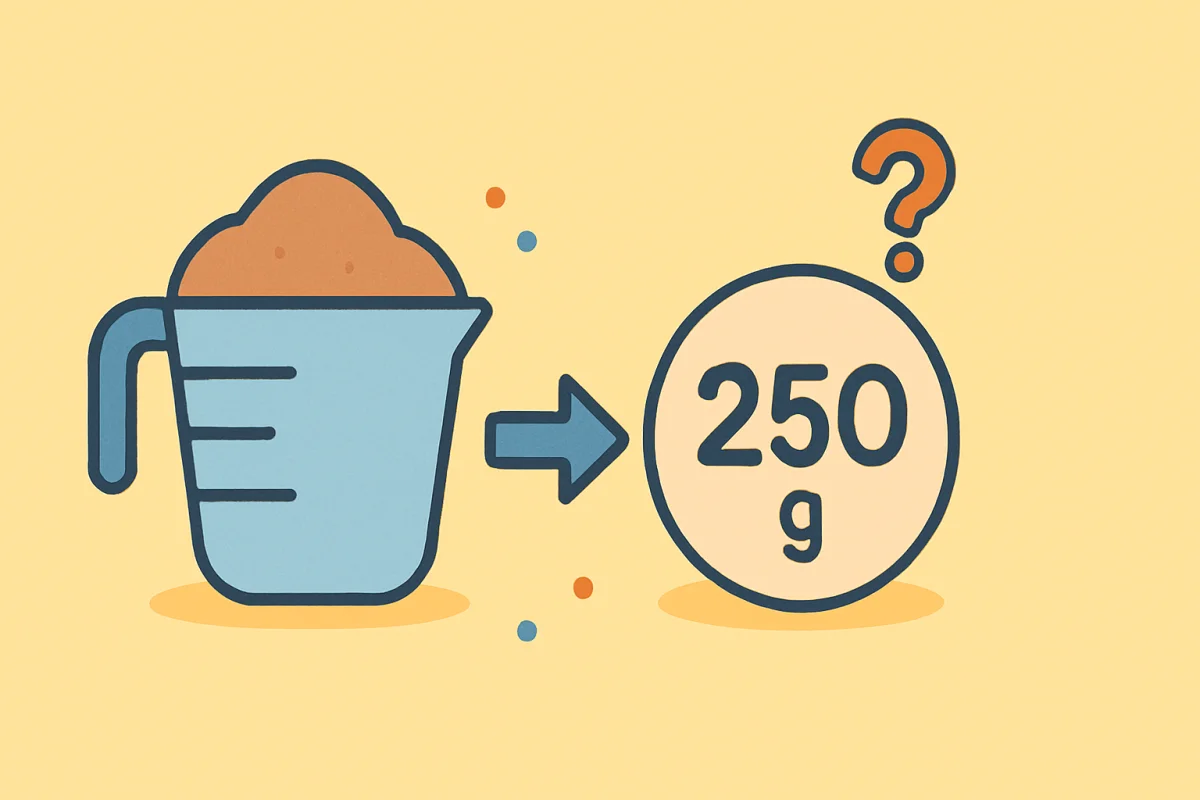
It does not. A cup of flour, a cup of sugar, and a cup of grated cheese do not weigh the same. That is why converting from a recipe written in grams to a volume-based version often creates inconsistency.
4. Forgetting Whether the Ingredient Is Trimmed or Raw
For meat, fruit, and vegetables, recipe weight sometimes refers to:
- Raw weight
- Trimmed weight
- Boneless weight
- Cooked weight
That difference matters when you convert and portion ingredients.
Practical Examples for Everyday Cooking
Here are the kinds of conversions home cooks use most often:
Butter
4 oz butter = 113 g8 oz butter = 227 g
Meat
1 lb ground beef = 454 g2 lb chicken thighs = 907 g
Flour and Dry Ingredients
If a recipe gives flour by weight:
10 oz flour = 283.5 g
That is far more reliable than trying to reverse-engineer it into cups.
Why Weight Conversion Helps With Meal Prep Too
This is not only about baking.
If you track portions, prep food in advance, or compare nutrition labels, weight conversion is often the cleanest way to stay consistent.
For example:
- Imported product labels may use grams
- US grocery packaging may use pounds and ounces
- Meal-prep containers often depend on consistent gram-based portions
That makes weight conversion useful beyond recipe accuracy. It improves repeatability.
Quick Conversion Reference
If you only need a fast practical chart:
| Ounces | Grams |
|---|---|
1 oz | 28 g |
2 oz | 57 g |
4 oz | 113 g |
8 oz | 227 g |
12 oz | 340 g |
16 oz | 454 g |
And for pounds:
| Pounds | Grams |
|---|---|
1 lb | 454 g |
2 lb | 907 g |
3 lb | 1361 g |
For everyday kitchen use, these rounded values are usually enough. For baking, more precision is better.
When to Use Weight Conversion Instead of Volume Conversion
Choose weight conversion when:
- You are baking
- You want consistency across repeated batches
- You are scaling recipes up or down
- The recipe already gives ingredient weights
- You are working with meat, butter, cheese, or flour
Choose cooking volume conversion when:
- The recipe is built around cups, tablespoons, and teaspoons
- You are converting liquids between ml and cups
- The ingredient is usually measured by volume in your workflow
That is the real connection between the Weight Converter and the Cooking Converter: one handles mass directly, and the other helps when recipes mix kitchen-specific measurement systems.
Final Takeaway
If you want more reliable results in the kitchen, converting pounds and ounces to grams is one of the simplest upgrades you can make. Weight-based cooking removes ambiguity, makes recipe scaling easier, and helps you repeat successful results.
Use the Weight Converter when you need exact mass conversions, and use the Cooking Converter when your recipe also mixes cups, tablespoons, milliliters, or other kitchen volume units. That combination covers most real-world recipe conversion problems without guesswork.