TDEE for Men by Age and Activity Level — Calorie Needs Reference
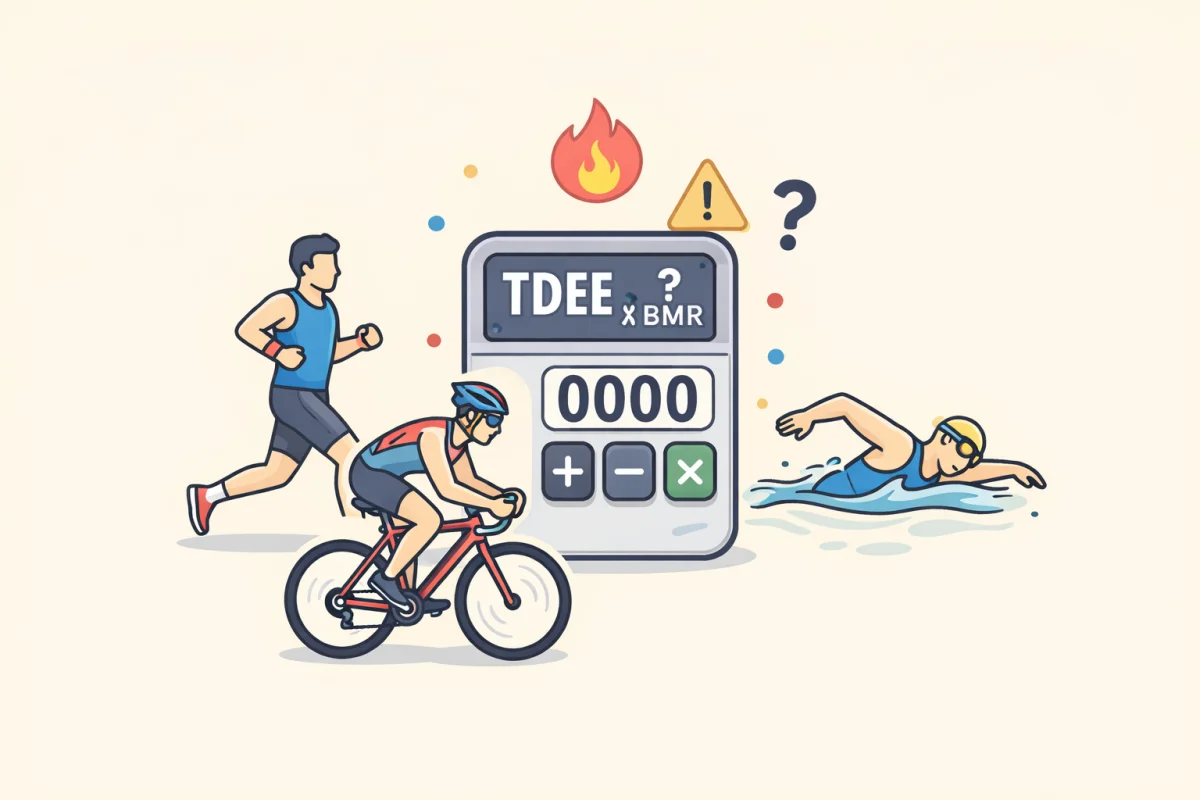
Total Daily Energy Expenditure (TDEE) is the number of calories a man burns in a day — everything from keeping his heart beating to walking to the car to an hour at the gym. Getting this number roughly right is the foundation of any nutrition approach, whether the goal is fat loss, muscle gain, or simply eating enough without overthinking it.
The TDEE Calculator gives you a personalized estimate based on your exact weight, height, age, and activity level. This article provides reference ranges for men across different ages and activity profiles, plus an explanation of what drives the differences.
How TDEE Is Calculated for Men
The most widely used approach uses the Mifflin-St Jeor equation to first calculate Basal Metabolic Rate (BMR) — the calories burned at complete rest — and then multiplies by an activity factor.
BMR for men: (10 × weight in kg) + (6.25 × height in cm) − (5 × age) + 5
TDEE = BMR × activity multiplier
Activity multipliers:
- Sedentary (desk job, little exercise): BMR × 1.2
- Lightly active (1–3 days/week exercise): BMR × 1.375
- Moderately active (3–5 days/week): BMR × 1.55
- Very active (6–7 days/week hard exercise): BMR × 1.725
- Extremely active (physical job + daily training): BMR × 1.9
The activity factor is where most people make their biggest error — more on that below.
TDEE Reference Tables for Men
These estimates use the Mifflin-St Jeor equation for a man of average height (178 cm / 5'10") at different weights and ages. Your actual TDEE will vary based on your specific measurements.
Age 25, 178 cm
| Weight | Sedentary | Lightly active | Moderately active | Very active |
|---|---|---|---|---|
| 70 kg (154 lb) | 1,965 | 2,277 | 2,467 | 2,657 |
| 80 kg (176 lb) | 2,085 | 2,416 | 2,617 | 2,817 |
| 90 kg (198 lb) | 2,205 | 2,555 | 2,768 | 2,981 |
| 100 kg (220 lb) | 2,325 | 2,694 | 2,919 | 3,145 |
Age 35, 178 cm
| Weight | Sedentary | Lightly active | Moderately active | Very active |
|---|---|---|---|---|
| 70 kg | 1,915 | 2,219 | 2,404 | 2,589 |
| 80 kg | 2,035 | 2,359 | 2,555 | 2,752 |
| 90 kg | 2,155 | 2,498 | 2,707 | 2,915 |
| 100 kg | 2,275 | 2,637 | 2,858 | 3,079 |
Age 45, 178 cm
| Weight | Sedentary | Lightly active | Moderately active | Very active |
|---|---|---|---|---|
| 70 kg | 1,865 | 2,162 | 2,342 | 2,521 |
| 80 kg | 1,985 | 2,301 | 2,493 | 2,685 |
| 90 kg | 2,105 | 2,441 | 2,644 | 2,848 |
| 100 kg | 2,225 | 2,580 | 2,796 | 3,011 |
Age 55, 178 cm
| Weight | Sedentary | Lightly active | Moderately active | Very active |
|---|---|---|---|---|
| 70 kg | 1,815 | 2,104 | 2,279 | 2,454 |
| 80 kg | 1,935 | 2,244 | 2,430 | 2,617 |
| 90 kg | 2,055 | 2,383 | 2,581 | 2,780 |
| 100 kg | 2,175 | 2,522 | 2,732 | 2,943 |
Each decade of age reduces TDEE by roughly 50–100 calories at the same weight and activity level. The effect compounds — a sedentary 55-year-old at 80 kg burns about 150 calories per day less than a sedentary 25-year-old at the same weight.
Why Men's Calorie Needs Decrease With Age
Three things drive the age-related decline in TDEE for men:
Muscle loss (sarcopenia). Muscle is metabolically active — it burns more calories at rest than fat tissue. From around age 30, men lose roughly 3–5% of muscle mass per decade without active resistance training. Less muscle means lower BMR. This is the biggest driver of age-related calorie need decline.
Hormonal changes. Testosterone plays a role in maintaining muscle mass and supporting metabolic rate. Testosterone levels in men decline gradually from the mid-30s onward, contributing to both muscle loss and the tendency to accumulate fat more easily.
Reduced spontaneous activity. People naturally move less as they age — fewer spontaneous fidgets, less walking, more time seated. This is separate from deliberate exercise and often goes unnoticed, but it meaningfully reduces TDEE over time.
Regular resistance training counteracts the muscle-loss component significantly. A 50-year-old man who trains 3–4 days per week can maintain a BMR close to his 30-year-old self, whereas a sedentary 50-year-old may be burning 200–300 fewer calories per day than he was at 30.
The Activity Level Most Men Get Wrong
The single most common TDEE calculation mistake is overestimating activity level. The multipliers are more demanding than they sound:
Sedentary (×1.2): A desk job with no deliberate exercise. Most office workers who don't exercise regularly fall here, even if they think of themselves as "not that sedentary."
Lightly active (×1.375): 1–3 days per week of exercise. This is appropriate for someone who goes to the gym twice a week and otherwise sits most of the day.
Moderately active (×1.55): 3–5 days per week of genuine exercise sessions. This is the category most gym-going men should use if they train 4–5 times per week but have a desk job otherwise.
Very active (×1.725): 6–7 days per week of hard training, or a physically active job (construction, manual labor) combined with regular exercise.
Extremely active (×1.9): Athletes in twice-daily training, or men with extremely physically demanding jobs who also train. This is genuinely rare.
Most men who consider themselves active are moderately active at most. Using "very active" when you train 4 days a week but sit at a desk for 8 hours produces a TDEE estimate that's 200–300 calories too high — enough to stall fat loss entirely.
Using TDEE to Set a Calorie Target
Once you have your TDEE estimate from the TDEE Calculator, the application is straightforward:
For fat loss: Subtract 300–500 calories from your TDEE. A 500-calorie daily deficit produces roughly 0.5 kg (1 lb) of fat loss per week. Larger deficits lose weight faster but risk muscle loss and are harder to sustain.
For muscle gain: Add 200–300 calories above TDEE (a "lean bulk"). More aggressive surpluses (500+ calories) tend to add fat alongside muscle, especially in men past their mid-20s.
For maintenance: Eat at your TDEE. In practice, most people eating at maintenance will drift ±200 calories day to day, which averages out over a week.
The TDEE estimate is a starting point, not a fixed number. Track your actual weight change over 2–3 weeks. If you're eating at a calculated deficit but not losing weight, your true TDEE may be lower than the estimate — common if you overestimated activity level. Adjust by 100–200 calories and reassess.
How Much Do Specific Activities Add?
To put the activity multipliers in perspective, here are approximate calorie burns for common activities for a 80 kg man:
| Activity | Duration | Approx. calories burned |
|---|---|---|
| Walking (5 km/h) | 60 min | ~280 kcal |
| Cycling (moderate) | 60 min | ~430 kcal |
| Weight training | 60 min | ~250–350 kcal |
| Running (9 km/h) | 60 min | ~570 kcal |
| Swimming (moderate) | 60 min | ~430 kcal |
| HIIT session | 30 min | ~300–400 kcal |
These are gross burns (total including resting metabolism during the activity). Net calorie burn from exercise is lower because your body would have burned some of those calories anyway.
For most men doing typical gym training, exercise adds 250–500 calories per session. Spread across the week, this raises TDEE meaningfully — but not as much as people tend to assume. A 4-session training week adds roughly 1,200–1,800 calories of exercise-related burn, which translates to a daily TDEE increase of about 170–260 calories. That's the difference between sedentary and moderately active on the multiplier scale.
For personalized macronutrient targets to go alongside your TDEE, the Macros Calculator gives protein, carb, and fat targets based on your goal.