Week Numbers for Content and Editorial Calendars — How to Plan Publishing by Week
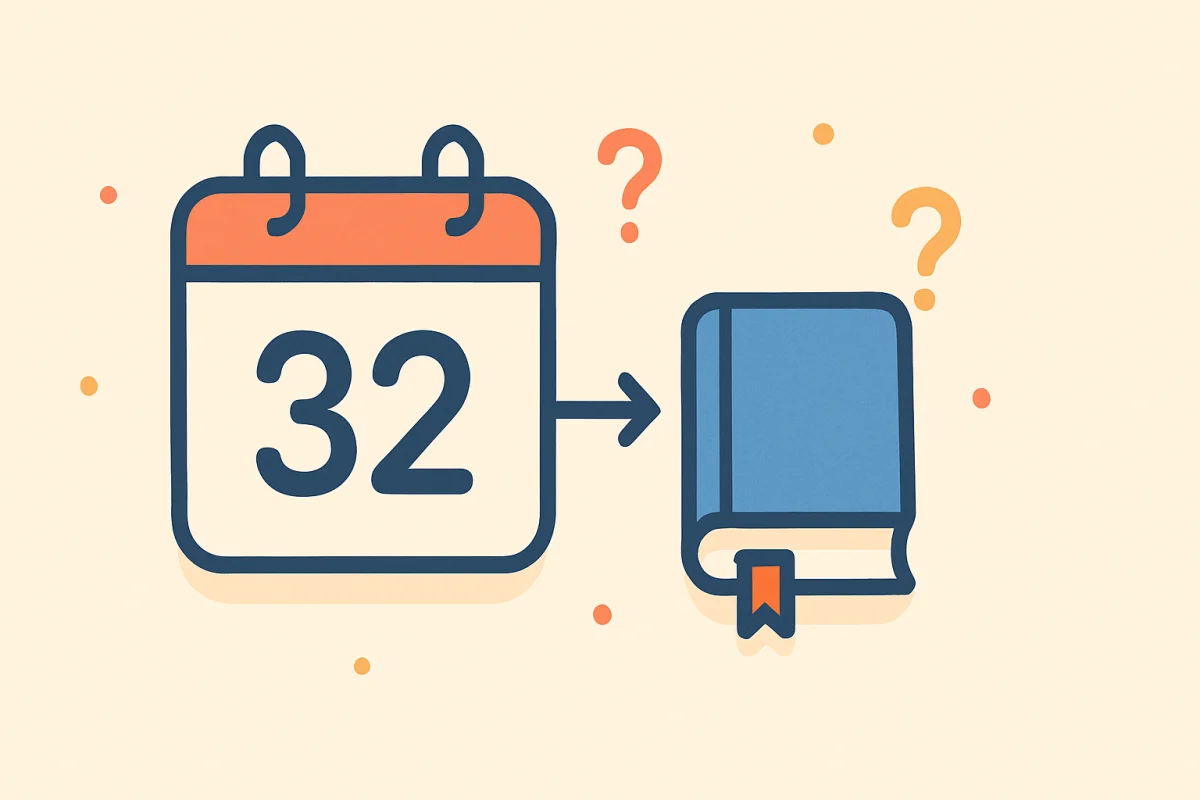
Content planning by calendar date creates a subtle problem: "publish the Q2 campaign launch on April 14" tells everyone a different story depending on what day of the week April 14 falls, what holidays surround it, and whether the team is in different time zones interpreting different local dates.
Planning by week number sidesteps most of these issues. "Launch W16, publish weekly content W17–W20, wrap W21" is a sequence that everyone on the team can anchor to regardless of where they are. Check the Current Week Number to see exactly where you are in the year right now.
Why Week Numbers Work Better Than Dates for Editorial Planning
A publication calendar that runs for a quarter covers roughly 13 weeks. Expressing that as W14 through W26 is more compact and consistent than listing 13 sets of Monday–Friday dates.
More importantly, week numbers create a shared frame across a team's different working contexts. A social media manager in New York and a content writer in Berlin don't share the same date conventions (MM/DD vs DD/MM creates real confusion in international teams), but they share the same ISO week number. W18 starts on Monday April 28 for everyone working to the ISO standard.
Week numbers also survive calendar shifts cleanly. If a campaign gets pushed by two weeks, moving from W18 to W20 is a single-line update in a planning doc. Moving from "April 28 – May 9" to "May 12 – May 23" requires rewriting multiple dates and rechecking what days of the week those fall on.
How to Structure an Editorial Calendar by Week
The cleanest approach is a simple spreadsheet or planning tool where each row is a week number and each column is a content type, platform, or author. The week number anchors the whole structure.
A basic format:
| Week | Theme / Focus | Blog post | Newsletter | Social | Video |
|---|---|---|---|---|---|
| W14 | Campaign teaser | Draft due | — | 3 posts | Thumbnail brief |
| W15 | Launch week | Publish Mon | Send Thu | Daily | Publish Wed |
| W16 | Follow-up | — | — | 2 posts | — |
| W17 | Case study | Draft due | — | 3 posts | — |
This structure makes the publication cadence visible at a glance without needing to know specific dates for every cell. When you want to know what week you're in, check Current Week Number and navigate to that row.
The week-based calendar works especially well when:
- Publication cadence is regular (weekly blog, biweekly newsletter, etc.)
- The team spans multiple countries or time zones
- Planning covers a full quarter or more
- You're coordinating with external partners or agencies who use week numbers in their own scheduling
Aligning Content Themes with Quarters by Week
Standard quarters map to ISO weeks predictably, though not perfectly:
Q1: Roughly W1–W13 (January to late March) Q2: Roughly W14–W26 (late March to late June) Q3: Roughly W27–W39 (late June to late September) Q4: Roughly W40–W52/53 (late September to December)
In 2026, Q2 runs approximately from W14 (March 30) to W26 (June 28). A campaign running for Q2 has 13 weeks of content — enough for a weekly blog post, biweekly newsletter, and one major mid-quarter push.
The caveat: ISO weeks don't align perfectly with calendar quarter boundaries because quarters are defined by months, not weeks. Q1 can end partway through a week. Most editorial teams simply pick the nearest clean week boundary (W13 or W14 for end of Q1) and plan accordingly.
Publication Timing Within a Week
Week numbers define which week content publishes, but editorial calendars also need to specify which day within the week.
Research and industry consensus on optimal publishing days varies by content type:
Blog posts: Tuesday and Wednesday consistently perform well for B2B content. Thursday works for longer-form content. Monday publishing often gets lost in the start-of-week inbox rush; Friday publishing tends to get lower initial traffic.
Email newsletters: Tuesday through Thursday performs best for open rates in most studies. Tuesday morning (sent around 9–11 AM in the recipient's time zone) is the most cited recommendation, though this varies significantly by audience.
Social media: Timing depends heavily on the platform and audience. LinkedIn performs well Tuesday–Thursday during business hours. Instagram engagement peaks are more evening-focused. Twitter/X engagement is more distributed. Most scheduling tools provide audience-specific analytics that outperform generic benchmarks.
Video: YouTube publishing on Thursday or Friday gives a video time to rank before the weekend viewing peak. Wednesday is often cited as a strong mid-week option for B2B video content.
None of these are rules — they're starting points. Test within your audience and adjust based on your actual engagement data, not generic advice.
Planning Seasonal Content with Week Numbers
Seasonal content planning benefits from thinking in week numbers because lead time for SEO content is long. A post targeting "best gift ideas for Christmas" needs to be published and indexed by early November to capture search traffic in late November and December.
Working backwards in week numbers:
- Christmas falls in W52 (December 25 in most years)
- Black Friday falls in W47 or W48 (late November)
- For organic search traffic on Christmas content, you want articles live by W44–W45 at the latest
- That means content should be drafted by W42, edited by W43, and published W44
This kind of backwards planning from target week to action week is cleaner with week numbers than with specific dates, because the week numbers are consistent year to year. "Draft holiday content by W42" is a durable rule; "draft holiday content by October 17" is a rule that has to be recalculated each year.
Similarly for Q1 planning: most companies want their annual strategy content, trend reports, and "new year" articles indexed by mid-January. That's W2 or W3. Those articles need to be drafted and ready to publish by late December — W51 or W52 of the previous year.
Managing Content Backlogs with Week Numbers
A content backlog — a list of planned articles, videos, or other pieces that aren't yet assigned to a publication date — becomes more manageable when you tag each piece with a target week rather than a target date.
The advantage: you can see at a glance how many pieces are scheduled for W18 versus W22, without having to check what day of the week specific dates fall on. If W18 has five pieces scheduled and your team can only produce three, you can move two pieces to W19 or W20 without recalculating date logistics.
Many content teams use a simple Kanban or spreadsheet system where pieces move from "Backlog" → "Assigned (Wxx)" → "In Draft" → "Review" → "Scheduled" → "Published." The week number tag in the "Assigned" column is the primary planning signal.
Using Week Numbers Across Publishing Platforms
Most publishing platforms allow you to schedule content by date and time. The week number sits at a planning layer above that — it's the unit you use to plan, then you translate to specific platform publish dates when you schedule.
A practical workflow:
1. Plan content themes and publication cadence by week (W14: launch, W15–W20: nurture series, W21: wrap-up) 2. Assign specific pieces to specific weeks in your editorial calendar 3. When scheduling each piece, use the Current Week Number or a week-number-to-date reference to convert the target week to the specific Monday–Sunday range 4. Schedule the platform publish date within that window, per your platform-specific timing preferences
This two-level system keeps high-level planning clean (work in weeks) while allowing flexibility in exact publish timing at the platform level.
Handling Irregular Weeks: Holidays and Short Weeks
Public holidays reduce content production capacity in the weeks where they fall. An editorial calendar that treats W17 the same as W15 will overschedule during a week where half the team is off.
The fix is simple: when you build your quarterly editorial calendar, mark the weeks that contain major holidays for your team's location. For a US-based team, that typically means flagging:
- W1 (New Year's week)
- W17 or W18 (Memorial Day week, late May)
- W27 (July 4th week)
- W46 (Thanksgiving week)
- W52 (Christmas/New Year's week)
Flag these as reduced-capacity weeks in your calendar and schedule fewer pieces or pre-produce content the week before. The week number makes the pattern visible across a full year, rather than discovering each holiday crunch as it approaches.
For international teams, overlay the major holiday calendars for each team member's country. The ISO week number provides the shared reference frame; the holiday flags are layered on top.