The True Cost of Meetings: How to Calculate Meeting Time for Freelancers and Teams
Most meetings look cheap on paper.
An hour here, thirty minutes there, a quick sync after lunch, a weekly planning call that “keeps everyone aligned.” None of it sounds dramatic in isolation. But when you look at what those meetings actually cost in salaries, billable time, and broken focus, the total gets uncomfortable fast.
That is why more teams are searching for terms like meeting cost calculator, cost of meetings, and how much meetings cost a company. They are not trying to be anti-collaboration. They are trying to figure out whether the time being spent is actually worth it.
If you run a team, bill by the hour, or work with clients, this is the practical way to think about meeting cost.
Why Meeting Cost Is Usually Underestimated
People naturally count only the visible part of the meeting:
- Start time
- End time
- Number of attendees
But the real cost usually includes more than the slot on the calendar:
- Hourly rates or salary cost of every participant
- Prep time before the call
- Context switching before and after it
- Lost deep-work time caused by interruptions
- Follow-up work created by the meeting itself
That is why a “simple one-hour meeting” is often much more expensive than it first appears.
The Basic Meeting Cost Formula
At the simplest level:
Meeting cost = sum of attendee hourly cost × meeting duration
Example:
- 5 people
- $50/hour average cost per person
- 1-hour meeting
The direct meeting cost is:
5 × 50 × 1 = $250
That number alone changes how people think about recurring calls.
If you want the direct figure quickly, the Meeting Cost Calculator gives you the number immediately.
Why Freelancers Feel Meeting Cost More Directly
For salaried teams, meeting cost is often abstract. For freelancers and agencies, it is frequently explicit.
A meeting may mean:
- Time that cannot be billed elsewhere
- Lower availability for focused delivery work
- More admin surrounding each client
- Reduced effective hourly earnings
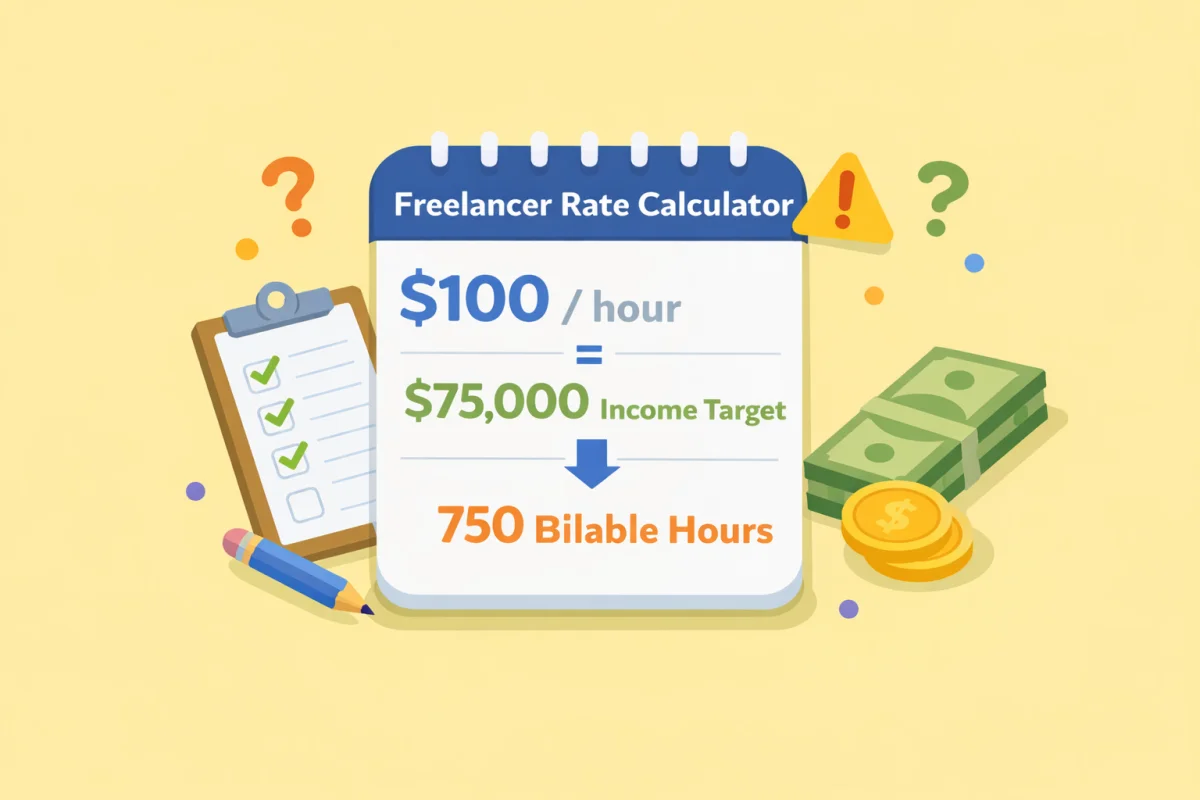
That is why meeting cost has a real overlap with hourly pricing. If you bill by the hour or price projects based on working capacity, the Freelancer Rate Calculator is part of the same economic picture.
A Real Example: The Weekly Team Meeting That Costs More Than Expected
Imagine this setup:
- 8 attendees
- Average loaded cost of $60/hour each
- 1-hour weekly meeting
Direct cost per meeting:
8 × 60 = $480
Monthly cost for a weekly meeting:
- about
4 × 480 = $1,920
Annual cost:
- about
$24,960
And that is before you count prep, follow-up, or lost focus time.
This is why recurring meetings deserve more scrutiny than one-off discussions.
The Hidden Cost: Interruptions and Context Switching
The calendar block is not always the biggest problem.
Meetings break concentration. If someone has 45 minutes of focused work before a call and 30 minutes after, that day may still feel fragmented enough to prevent meaningful progress. In jobs that depend on writing, design, coding, analysis, or strategic planning, the interruption cost can rival the meeting itself.
That does not mean every meeting is bad. It means the real cost is often larger than the calendar suggests.
When a Meeting Is Worth the Cost
Meetings can absolutely be worth it when they:
- Unblock multiple people quickly
- Prevent expensive mistakes
- Resolve decisions that would drag out asynchronously
- Handle sensitive or complex communication better in real time
- Replace a long chain of unclear messages
The problem is not meetings as a category. The problem is low-value meetings that feel harmless because nobody calculates them.
When Meetings Start Becoming Too Expensive
That usually happens when:
- The attendee list is too large
- The agenda is vague
- The meeting repeats without being questioned
- Decisions are not actually made
- People attend “just in case”
Once that happens, the organization is paying for coordination theater instead of coordination.
How Freelancers Should Price Meeting Time
Freelancers often undercharge for client communication because they treat meetings as part of “relationship management” instead of part of the job.
In reality, meetings consume:
- Billable capacity
- Energy
- Preparation time
- Scheduling overhead
If you regularly spend time on discovery calls, review sessions, project check-ins, and revisions, your pricing model needs to absorb that. Otherwise your effective hourly rate drops below what you think you are earning.
That is exactly where the Freelancer Rate Calculator becomes relevant: it helps you set rates that account for non-delivery time, including meetings.
A Simple Way to Audit Meeting Value
Before keeping or scheduling a recurring meeting, ask:
- Does this require real-time discussion?
- Does every attendee need to be there?
- Is there a decision to make?
- Would a document or async update do the job better?
- What is the total cost of this meeting over a month or year?
Those five questions filter out a surprising amount of waste.
Common Meeting Cost Mistakes
1. Counting Only Salary and Ignoring Opportunity Cost
Time spent in meetings is time not spent on revenue-generating or high-value work.
2. Ignoring Recurrence
A meeting that feels cheap once can become expensive when repeated weekly or daily.
3. Treating Senior Attendance as Neutral
The more senior the attendees, the more expensive the room becomes per minute.
4. Assuming Short Meetings Are Automatically Cheap
A short meeting with many expensive attendees can still cost a lot.
Quick Practical Takeaway
If you want a fast rule, multiply:
- number of attendees
- hourly cost per attendee
- meeting length
Then ask whether the result feels justified by the decision or progress created.
That simple exercise changes how most people think about calendars.
Final Takeaway
The true cost of meetings is rarely just the time block itself. It includes the direct cost of everyone in the room, the disruption to focused work, and the impact on billable capacity for freelancers and agencies.
If you want the hard number, use the Meeting Cost Calculator. If you want to understand how meetings affect pricing and profitability, the Freelancer Rate Calculator is the natural companion. Together, they make it much easier to see whether a meeting is helping the business or quietly draining it.