Are Daily Standups Worth the Cost? How to Measure the Real ROI of Team Meetings
Daily standups are one of those meetings that feel too small to question.
They are short. They are familiar. They are often part of a team’s default routine. Because they only take 10 or 15 minutes, they rarely trigger the same scrutiny as a long weekly status call. But that is exactly why they can become expensive without anyone noticing.
If you have ever wondered whether a daily standup is actually helping your team or just consuming time in a more socially acceptable format, you are asking the right question.
That is why searches like daily standup cost, are standups worth it, and cost of team meetings keep appearing. Teams are trying to figure out whether the routine still earns its place on the calendar.
Why Daily Standups Seem Cheap at First
On paper, a standup looks harmless:
- 15 minutes
- a small team
- one recurring slot
The problem is that recurring meetings multiply quietly.
A 15-minute daily standup with 8 people is not just “15 minutes.” It is:
- 2 hours of team time per day
- roughly 10 hours per week
- more than 40 hours per month
That is before you think about context switching or the fact that the meeting interrupts the start of concentrated work.
The Basic Cost Formula for a Daily Standup
At the simplest level:
Meeting cost = number of attendees × hourly cost × duration
Let’s say:
- 8 people attend
- average hourly cost is
$60 - the standup lasts
15 minutes(0.25hours)
The direct cost per standup is:
8 × 60 × 0.25 = $120
If that happens 5 times a week:
$120 × 5 = $600 per week
Over a month, that is around:
$2,400
Over a year, it becomes a serious line item.
If you want the direct number quickly, the Meeting Cost Calculator makes it obvious fast.
Why the Real Cost Is Often Higher Than the Math
The direct wage or salary cost is only the visible layer.
Daily standups can also create:
- interruption at the start of focus time
- repeated context switching
- performative updates that do not change decisions
- extra follow-up conversations after the “short” meeting
For roles that depend on deep concentration, the interruption may be as costly as the meeting itself.
That does not mean daily standups are inherently bad. It means their value has to be higher than the cost they create.
When Daily Standups Are Actually Worth It
Standups can absolutely pay for themselves when they:
- surface blockers early
- prevent duplicated work
- keep fast-moving teams aligned
- replace longer, messier status meetings
- help cross-functional teams coordinate dependencies
In those cases, the short recurring meeting may save much more time than it costs.
The key point is not whether a standup exists. It is whether it creates useful movement, not just visible activity.
When Daily Standups Stop Being Worth It
The meeting starts losing value when:
- people give updates no one uses
- the same information already exists in tools or async notes
- blockers are rarely discussed meaningfully
- attendance is broad but contribution is shallow
- the team joins from habit rather than need
Once that happens, the standup becomes a daily tax on attention.
A Useful Test: What Would Break If the Standup Disappeared?
This is one of the clearest questions you can ask.
If you removed the standup tomorrow:
- Would blockers go unnoticed?
- Would priorities become unclear?
- Would handoffs fail?
- Or would the team mostly continue as normal?
If little would break, the meeting may be running on inertia rather than necessity.
Daily Standups and Team Size
The bigger the team, the more expensive the standup becomes — and the less likely every update is useful to every listener.
A 15-minute standup with:
- 4 people
is very different from a 15-minute standup with:
- 14 people
Larger groups increase both direct cost and information dilution. At some point, the team is no longer coordinating efficiently. It is broadcasting status.
How Meeting Cost Changes for Agencies and Client Work
In service businesses, the cost question becomes even sharper.
A recurring internal standup does not just consume payroll time. It may also reduce client-delivery capacity. If your business depends on billable utilization, routine internal meetings can lower effective earnings in ways that are easy to miss.
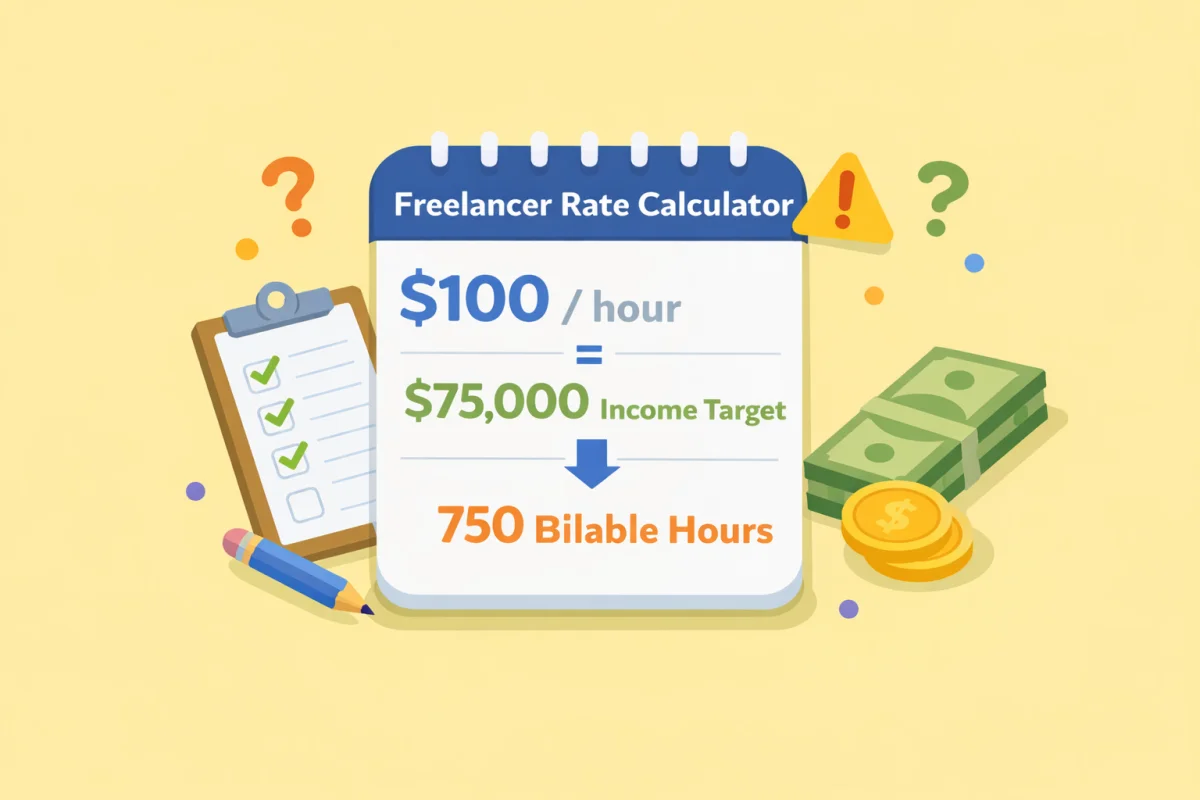
That is where the Freelancer Rate Calculator becomes relevant even for small teams and agencies. If coordination time is real but unpriced, margins shrink quietly.
Better Alternatives When Standups Are No Longer Efficient
If the current standup is not earning its time, the answer is not always “no communication.”
Often the better option is:
- async updates with a clear template
- fewer weekly check-ins instead of daily ones
- standups only for teams with active dependencies
- shorter attendee lists
- calls only when there is an actual blocker or decision
The point is to preserve coordination while removing routine waste.
Common Mistakes Teams Make
1. Evaluating the Standup by Length Alone
Short does not automatically mean cheap. Recurrence and attendee count matter more than people think.
2. Never Rechecking the Format
A meeting that was useful at one stage of a team’s growth may no longer be useful later.
3. Inviting Too Many People
The wider the attendance, the easier it becomes for updates to lose relevance.
4. Confusing Ritual With Value
Consistency feels productive, but only if the meeting continues to solve a real problem.
Final Takeaway
Daily standups are worth the cost only when they save more time than they consume. The direct meeting cost is easy to calculate. The harder part is being honest about interruption, relevance, and whether the meeting still improves execution.
Use the Meeting Cost Calculator to quantify the visible cost of the standup. If your business also depends on protecting billable time and margins, the Freelancer Rate Calculator helps show what recurring coordination time is doing to your effective economics.