Unix Timestamp और Year 2038 की समस्या समझाई गई
19 जनवरी 2038 को, बिल्कुल 03:14:07 UTC पर, बड़ी संख्या में कंप्यूटर सिस्टम्स एक date overflow का सामना करेंगे — Y2K के Unix timestamp के बराबर।
इसका कारण न तो रहस्यमय है और न ही जटिल। यह Unix के शुरुआती दिनों में लिए गए एक फैसले से आता है: समय को 32-bit integer के रूप में स्टोर करना। 1970 में यह एक समझदारी भरा फैसला था। 2038 में, यह स्पेस खत्म हो जाता है।
किसी timestamp value का अभी क्या अर्थ है यह देखने के लिए, Unix Timestamp Converter किसी भी timestamp को — समस्याग्रस्त 2,147,483,647 सहित — तुरंत एक पठनीय date में बदल देता है।
Unix Timestamps कैसे काम करते हैं
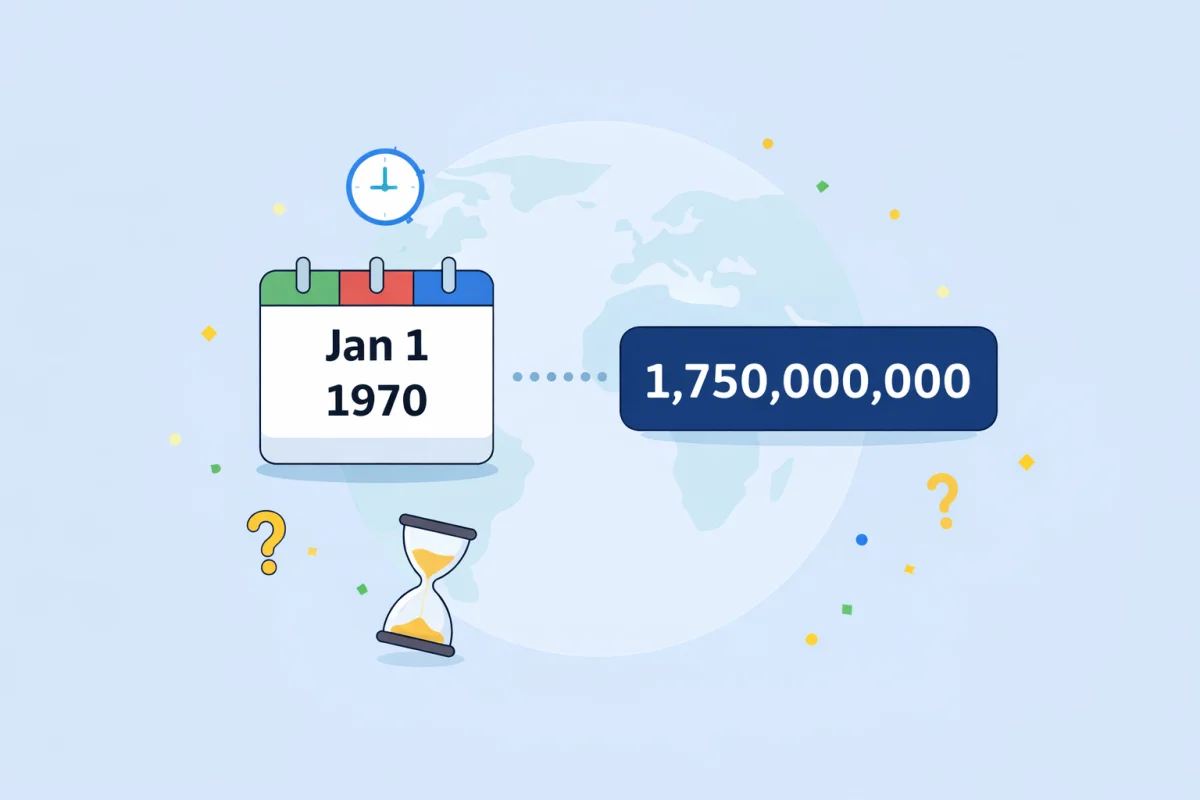
Unix timestamp 1 जनवरी 1970 को 00:00:00 UTC के बाद से गुजरे हुए सेकंड की संख्या है। इस शुरुआती बिंदु को Unix epoch कहा जाता है।
अभी, timestamp कहीं 1,712,000,000 के आसपास है — एक 10-अंकीय संख्या जो हर सेकंड एक से बढ़ती है।
Timestamp का उपयोग computing में हर जगह होता है: server logs, API responses, database records, authentication tokens, file system metadata, और operating system internals। यह एक सुविधाजनक फॉर्मेट है क्योंकि एक single integer किसी सटीक moment को दर्शाता है, compare और sort करना आसान है, और यह timezone-agnostic है।
32-Bit Integer क्या स्टोर कर सकता है
एक signed 32-bit integer −2,147,483,648 से 2,147,483,647 तक की values स्टोर कर सकता है।
जब Unix विकसित किया गया, timestamps को signed 32-bit integers के रूप में स्टोर किया जाता था। सर्वोच्च value — 2,147,483,647 — 19 जनवरी 2038 को 03:14:07 UTC के अनुरूप है।
एक सेकंड बाद, counter overflow हो जाता है। एक signed 32-bit integer 2,147,483,648 को स्टोर नहीं कर सकता, इसलिए यह सबसे बड़े नकारात्मक value में wrap होता है: −2,147,483,648। जब इसे Unix timestamp के रूप में interpret किया जाता है, तो यह नकारात्मक संख्या 13 दिसंबर 1901 को 20:45:52 UTC को दर्शाती है।
व्यावहारिक प्रभाव: कोई भी system जो timestamps को signed 32-bit integer के रूप में स्टोर करता है और इस overflow को handle नहीं करता है, 2038 आने पर अचानक 1901 की dates दिखाएगा।
Y2K एक उपयोगी तुलना क्यों है
ज्यादातर लोगों ने Y2K के बारे में सुना है — इस चिंता से कि कंप्यूटर सिस्टम्स जो years को दो अंकों के रूप में स्टोर करते हैं (1999 के लिए 99) 00 में roll over करने पर विफल हो सकते हैं, जिसे 2000 की बजाय 1900 के रूप में interpret किया जा सकता है।
Year 2038 की समस्या संरचनात्मक रूप से समान है:
- दोनों एक storage format से होते हैं जो चुने जाने पर पर्याप्त लगता था
- दोनों केवल एक विशिष्ट date threshold पर प्रकट होते हैं
- दोनों एक साथ कई systems को प्रभावित करते हैं
- दोनों ठीक किए जा सकते हैं, लेकिन deliberate migration प्रयास की आवश्यकता होती है
मुख्य अंतर scale है। Y2K मुख्य रूप से applications में date strings और two-digit year fields को प्रभावित करता है। 2038 की समस्या एक fundamental data type (32-bit integer) को प्रभावित करती है जिसका उपयोग असंख्य platforms पर operating system level पर होता है।
कौन से Systems वास्तव में जोखिम में हैं
जोखिम में नहीं:
- आधुनिक 64-bit operating systems (Linux, macOS, 64-bit hardware पर Windows) — ये 64-bit time representations का उपयोग करते हैं
- अधिकांश आधुनिक applications जो 64-bit platforms पर बनी हैं
- 2000 के बाद बने नए systems जिन्होंने शुरुआत से ही 64-bit integers का उपयोग किया
संभावित रूप से जोखिम में:
- 32-bit processors पर चलने वाली embedded systems — ये industrial equipment, medical devices, automotive systems, network hardware, और consumer electronics में व्यापक हैं
- Legacy software जो 32-bit systems के लिए compiled है और timestamps को
time_tके रूप में स्टोर करती है और कभी update नहीं की गई - पुरानी databases जहाँ timestamp columns 32-bit integers के रूप में defined हैं
- File systems जो file modification times को 32-bit values के रूप में स्टोर करते हैं (उदाहरण के लिए, Linux पर ext3 में यह सीमा है)
- कुछ network protocols जो timestamps को 32-bit fields में encode करते हैं
Embedded systems की category विशेष रूप से चिंताजनक है क्योंकि ये devices अक्सर लंबी operational lifespans रखते हैं, stripped-down operating systems चलाते हैं जिनमें automatic updates नहीं होते, और replace या update करना आर्थिक रूप से व्यवहार्य नहीं हो सकता।
वास्तविक दुनिया के निहितार्थ
औद्योगिक और बुनियादी ढांचे के सिस्टम्स
Power grids, water treatment, manufacturing, और building management के लिए control systems अक्सर decades-long lifespans वाली embedded hardware पर चलते हैं। 2005 में installed एक programmable logic controller (PLC) जो 32-bit firmware पर चलता है, 2038 में अभी भी operational हो सकता है — और timestamp overflow के समय unexpected व्यवहार कर सकता है।
वित्तीय सिस्टम्स
Banking और trading systems अक्सर mainframes पर या पुरानी 32-bit platforms पर legacy software चलाते हैं। कोई भी system जो transaction timestamps को 32-bit integers के रूप में स्टोर करता है, गलत timestamps produce कर सकता है या overflow point के अतीत calculated dates वाले transactions को reject कर सकता है।
IoT devices
IoT devices में सस्ते, low-power microcontrollers का प्रसार मतलब है कि लाखों devices 32-bit time representations के साथ deploy किए जा रहे हैं और 2038 के बाद भी service में रहेंगे। Consumer routers, smart home devices, industrial sensors — कई 32-bit Linux kernels या bare-metal firmware चलाते हैं जिनमें कोई भी 2038 mitigation नहीं होती।
File systems
File metadata — creation time, modification time, access time — operating system द्वारा store की जाती है। 32-bit time fields का उपयोग करने वाले systems पर, overflow के बाद files को 1901 में modification dates दिखाई दे सकते हैं। यह backup software, version control systems, और कुछ भी जो file modification time को comparisons के लिए use करता है, को break कर देगा।
64-Bit Systems के साथ क्या होता है
एक signed 64-bit integer 9,223,372,036,854,775,807 तक की values स्टोर कर सकता है।
Unix timestamp के रूप में, यह सर्वोच्च value वर्ष 292,277,026,596 को दर्शाता है। 64-bit systems के लिए timestamp space खत्म होने के बारे में कोई व्यावहारिक चिंता नहीं है — उस संख्या तक पहुँचने से बहुत पहले ब्रह्मांड समाप्त हो जाएगा।
अधिकांश आधुनिक operating systems 2038 से बहुत पहले 64-bit time representations में migrate हो गए:
- 64-bit hardware पर Linux शुरुआती 2000s से 64-bit
time_tका उपयोग कर रहा है - 32-bit hardware पर Linux ने kernel version 5.6 में इस issue को address किया (2020 में released), जो 32-bit systems पर 64-bit time interface का उपयोग करता है
- macOS OS X 10.6 में 64-bit time पर चला गया (2009)
- Windows 64-bit
FILETIMEstructures का उपयोग करता है, जो वर्ष 30,000 के बाद सुरक्षित हैं
शेष जोखिम उन systems में है जो explicitly databases में 32-bit integer columns में timestamps स्टोर करते हैं, या network protocol fields में जो 32-bit के रूप में defined हैं, OS time_t type पर निर्भर होने के बजाय।
समाधान
समाधान अवधारणात्मक रूप से सरल है: 32-bit timestamp storage को 64-bit से बदलें। व्यावहार में, इसके लिए आवश्यक है:
1. Code में timestamps स्टोर करने के लिए उपयोग किए जाने वाले data type को update करना (int32_t या time_t on 32-bit → int64_t या time_t on 64-bit) 2. Database columns को 32-bit integer या TIMESTAMP fields (जो पुरानी MySQL और similar systems में अक्सर 32-bit होते हैं) से 64-bit alternatives में migrate करना 3. Network protocol implementations को update करना जहाँ 32-bit timestamp fields protocol specification का हिस्सा हैं 4. Embedded devices पर firmware को recompile या replace करना
64-bit platforms पर चलने वाले software के लिए, समाधान अक्सर 64-bit time_t के साथ एक recompile है। 32-bit hardware पर embedded systems के लिए, इसमें hardware replacement की आवश्यकता हो सकती है।
आवश्यक effort बहुत अलग-अलग है। आधुनिक infrastructure पर चलने वाला एक well-maintained web application शायद minimal changes को ज़रूरत है। Custom firmware वाला एक legacy industrial control system और कोई active development team नहीं, बहुत कठिन समस्या है।
हमारे पास कितना समय है?
लिखने के समय (अप्रैल 2026), 19 जनवरी 2038 तक लगभग 12 साल बाकी हैं।
यह पर्याप्त समय लगता है। Actively maintained software systems के लिए, शायद यह है — changes अच्छी तरह से समझे जाते हैं और systematically plan और execute किए जा सकते हैं।
Abandoned software, unmaintained embedded devices, और 32-bit hardware पर चलने वाली legacy infrastructure की long tail के लिए, 12 साल उतना आरामदायक नहीं है। जो devices update करना सबसे मुश्किल है, वे बिल्कुल वही हैं जो 2038 में अभी भी चल रहे होने की सबसे अधिक संभावना है।
जो organisations सबसे ज्यादा चिंतित होने चाहिए, वे critical infrastructure में 32-bit embedded systems चलाने वाले हैं — और वे बिल्कुल वही organisations हैं जिनके पास इसे proactively address करने का budget और institutional knowledge होने की संभावना सबसे कम है।
Year 2038 की समस्या 19 जनवरी 2038 को आसमान से planes को गिराने वाली नहीं है। लेकिन कुछ systems गलत तरीके से behave करेंगे, कुछ logs nonsensical timestamps दिखाएंगे, और कुछ devices को emergency attention की आवश्यकता होगी। जितना अधिक आप critical infrastructure पर 32-bit hardware के करीब हैं, उतना ही इसे अभी check करना बाद में करने के बजाय लायक है।