How to Calculate Subscription Renewal and Expiry Dates Correctly
Subscription dates should be simple: sign up on a date, renew on the same date each month or year. In practice, they're a source of billing disputes, unexpected charges, and confusion about when access actually ends.
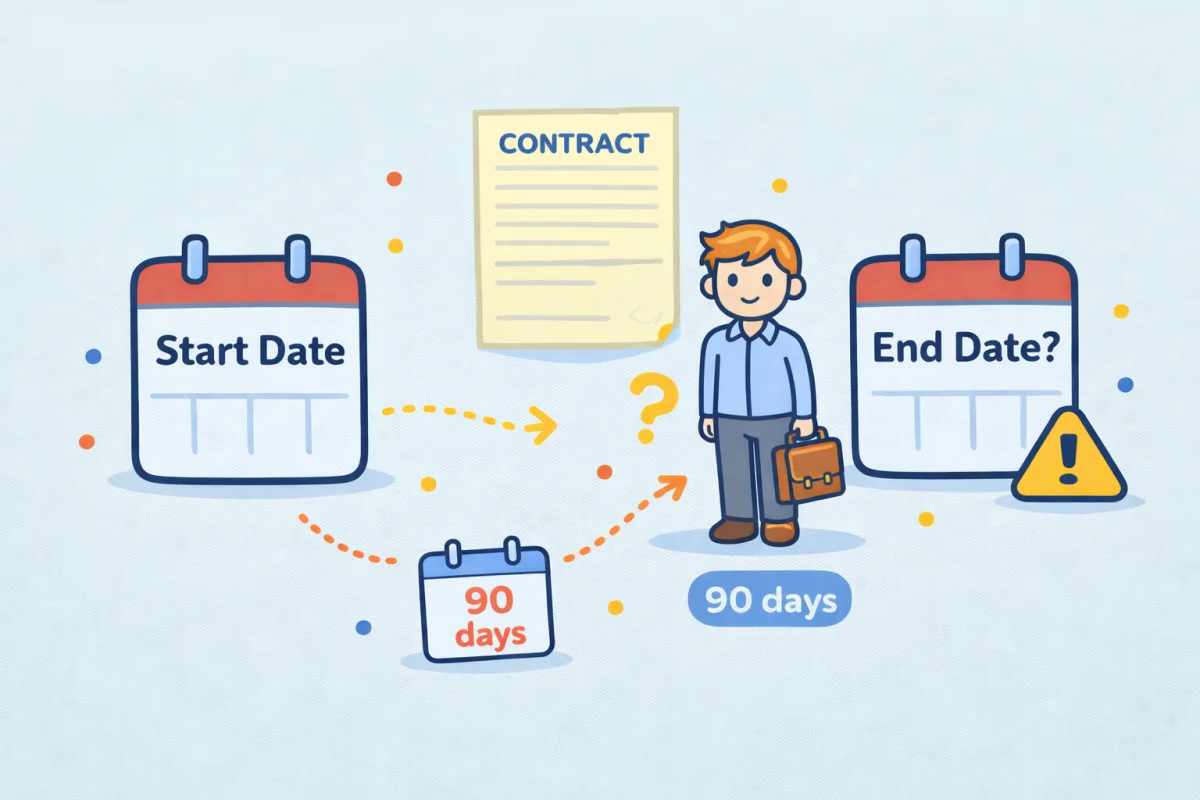
The complication is that months have different lengths, years have different lengths (leap years), and what "one month from January 31" means requires a specific interpretation. Different billing systems make different choices, which is why two subscriptions started on the same day can renew on different days after a few billing cycles.
The Date Calculator handles date arithmetic correctly, including month-end clamping and leap year rules. This article explains what's happening under the hood.
How Monthly Billing Dates Are Calculated
For a simple case — subscribing on the 15th — monthly billing is easy. Renew on the 15th of each subsequent month. January 15, February 15, March 15. No edge cases.
The complications arise for dates near the end of the month.
Subscribing on January 31: The next billing date is February 28 (or 29 in a leap year), not March 3. If the billing system adds 31 days instead of adding 1 month, you get March 3 — which is the wrong month. Most well-designed billing systems add months, not days, and clamp to the last day of shorter months.
After clamping to February 28, what happens in March? There are two approaches: 1. Maintain original day: March 31, April 30, May 31... The billing date follows the original day (31st) where months allow it, and the last day of shorter months otherwise 2. Follow the clamped date: March 28, April 28, May 28... The clamping permanently shifts the billing date
Approach 1 is correct and matches legal convention. Approach 2 is wrong but shows up in buggy billing implementations. If your subscription started on the 31st and your March billing date is the 28th, your billing system is using Approach 2.
Annual Billing Edge Cases
Annual subscriptions are simpler than monthly ones — there's only one renewal date per year. The main edge case is February 29 for leap year subscribers.
If you subscribe on February 29, 2024 (a leap year), your next annual renewal is February 28, 2025 (not a leap year). Most systems handle this correctly because it's a known exception.
Annual billing also has a common confusion point: "one year from today" is not always 365 days from today. In a leap year, it might be 366. In a non-leap year, 365. A yearly subscription from March 1, 2024 to March 1, 2025 spans 366 days (2024 is a leap year). From March 1, 2025 to March 1, 2026 spans 365 days.
This matters if you're comparing subscription cost per day — annual subscribers in leap years get one extra day per cycle at the same price.
Free Trial Periods: Days, Not Months
Free trials are almost always expressed in calendar days (14-day trial, 30-day trial) rather than months. Adding 30 calendar days to a start date is simpler than adding one month — no month-end clamping needed.
14-day trial starting February 20: Ends March 6 (in a non-leap year, February has 28 days: 20 + 14 = 34, day 34 of the year = March 5... actually February 20 + 14 days = March 6).
Let the Date Calculator do this — it's faster and avoids off-by-one errors from counting manually.
30-day trial starting January 31: Ends March 1 (January has 31 days, so 31 + 30 = 61st day = March 2 in a non-leap year, March 1 in a leap year). Add 30 days to January 31: January has 31 days, so you have 31 - 31 = 0 days left in January, then 28 days of February = 28, then you need 2 more days in March, so March 2 in a non-leap year.
This is why a "30-day free trial from January 31" ends on March 2 — which is into the third calendar month, not the second. Subscribers who don't notice the exact end date get billed sooner than they expected.
When "30 Days" and "1 Month" Are Different
This is a frequent source of confusion in subscription terms.
"30-day return policy" vs "1-month return policy":
- Purchase date: January 15
- 30 days later: February 14
- 1 month later: February 15
One day difference. Usually not significant, but it can matter.
Purchase date: January 31:
- 30 days later: March 2
- 1 month later: February 28
A four-day difference. For a return window, this could mean the difference between being in policy or out of it.
Legal and commercial terms that specify "days" mean calendar days. Terms that specify "month" or "months" mean calendar months with month-end clamping. If you're reading a terms of service and it says "30 days," don't assume that means "next month."
Calculating Your Own Subscription Dates
For any subscription or trial, the Date Calculator handles all of this correctly:
1. Enter your start date (the date you subscribed or the trial started) 2. Add the relevant duration (months for monthly billing, days for trial periods, years for annual billing) 3. The result is your next renewal or expiry date
For annual subscriptions, check this at signup so you know when to cancel if you want to avoid the next charge. Most annual subscriptions require cancellation before the renewal date — not after — to avoid being charged for the next year.
Common Subscription Date Mistakes
Assuming "cancel anytime" means immediate access cancellation. Most subscriptions bill in advance and provide access until the end of the paid period, even after cancellation. If you cancel today but your next billing date is in 20 days, you typically have access for 20 more days.
Confusing the trial end date with the billing date. If your trial ends on March 5 and billing occurs on March 5, your card is charged on the day you would have expected to cancel. Setting a reminder for March 4 gives you time to cancel before the charge.
Not accounting for time zones. Some subscription services process renewals and expirations based on UTC midnight. If you're 8 hours behind UTC, a March 6 expiry in UTC is March 5 evening in your local time. Subscription access may end earlier in local time than the date suggests.
Annual billing after a monthly trial. Some services offer a monthly trial that converts to annual billing. The first annual charge occurs on the monthly trial end date, not on a nice "same day each year" — because the trial added a month, and the annual date is now anchored to that odd start point.
For the most reliable calculation, use the Date Calculator with your exact subscription start date and add the specific number of days or months in your trial or billing cycle. It handles the calendar arithmetic so you know the exact dates to watch.